





duck wing flight
ducks in flight

The BASC Wing Survey – vital wildlife data in the bag

A new peer-reviewed study using BASC Wing Survey data has just been published in a leading scientific journal. Co-author Heather Warrender explains how you can help this key citizen science project shape wildfowl research and management.

The study, published in the European Journal of Wildlife Research, explores population trends in two of the UK’s most popular quarry ducks: the Eurasian wigeon and Eurasian teal.

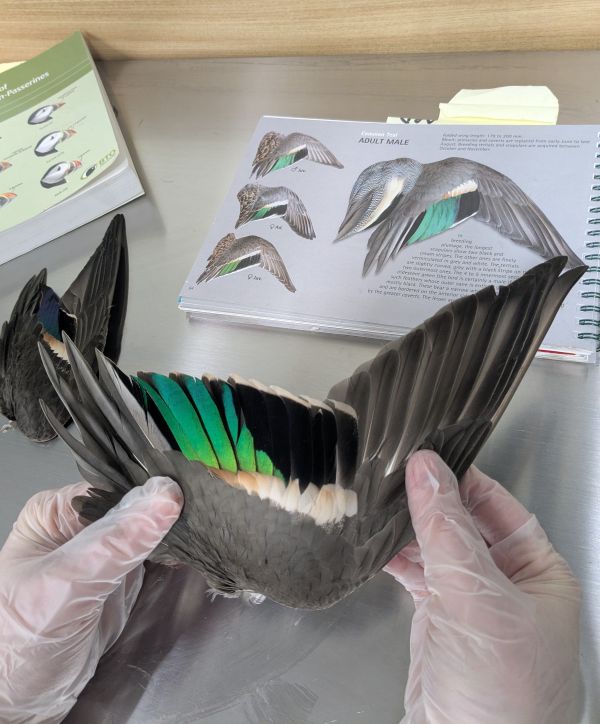
It uses BASC Wing Survey data alongside waterbird population trends to provide valuable demographic insight and context to changes observed in wildfowl populations. This long-term dataset exists thanks to the continued contributions of individual shooters. It turns shooting activity into data that informs our understanding of duck and geese populations on a much larger scale.

You can continue to support this important work by submitting wings to the BASC Wing Survey. Your contributions help to strengthen the evidence underpinning sustainable wildfowl harvest in the UK, aligning with our Sustainable Shooting Code of Practice.

Increasing knowledge and understanding

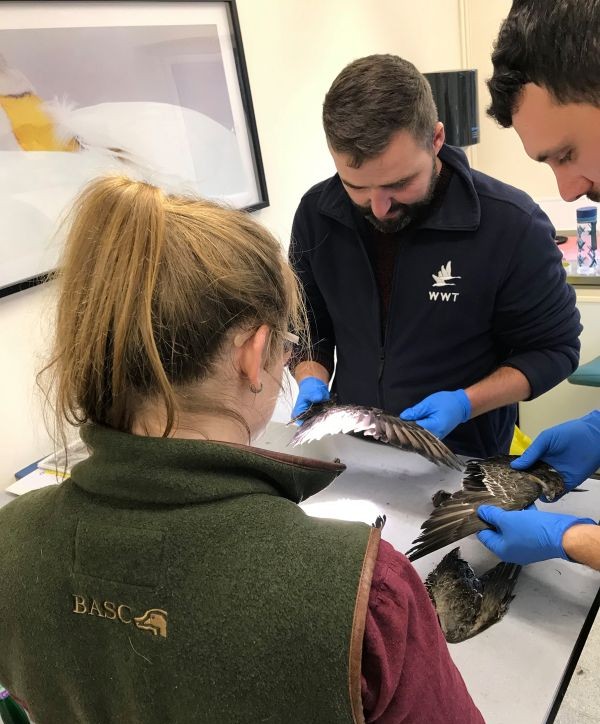
For decades, UK shooters have been submitting wings to the BASC Wing Survey, transforming how we understand wildfowl populations across the northwest European flyway. 

Traditional counts tell us how many birds are present on sites, which, in turn, help generate population trends. These counts and trends are essential to the understanding of populations, but they don’t tell us everything.

Counts don’t reveal:

  • how many juveniles survived the breeding season and migration
  • the proportion of adult females in the population
  • how age and sex ratios of the population have shifted through the winter
  • whether changes in population composition seen in one country are reflective of the wider flyway

These demographic details are crucial for interpreting population trends. Conventional field surveys and bird ringing are time-consuming, resource-heavy and often limited in scale. However, wing surveys allow us to answer a number of these questions.

How you can support this vital work

If you shoot ducks, geese or waders, you can support this vital work by:

  • submitting wings to the BASC Wing Survey
  • encouraging others in your club or syndicate to take part
  • following the Sustainable Shooting Code of Practice

Every wing adds value and every shooter who takes part helps ensure that wildfowling remains sustainable and informed by evidence. When thousands of wings are submitted over years, the resulting trends provide powerful insight into how our quarry species are faring. And when UK data is combined with wing surveys from across the migratory route, we can build a far clearer, flyway-wide picture of what those trends mean in practice.

The BASC Wing Survey began in the 1960s and ran until 2002, providing decades of valuable information. Recognising the growing data gap, BASC restarted the survey in 2017.  What began with 145 wings in that first restarted season has grown into more than 3,000 wings in 2024/25.

In a world of increasing regulation and with shooting activities under close scrutiny, the survey shows the shooting community is actively contributing to the monitoring and understanding of the species it values.

Head to our dedicated conservation in action pages to find out how to get involved in the BASC Wing Survey or our other conservation projects.

Share

Privacy Overview

This website uses cookies so that we can provide you with the best user experience possible. Cookie information is stored in your browser and performs functions such as recognising you when you return to our website and helping our team to understand which sections of the website you find most interesting and useful.