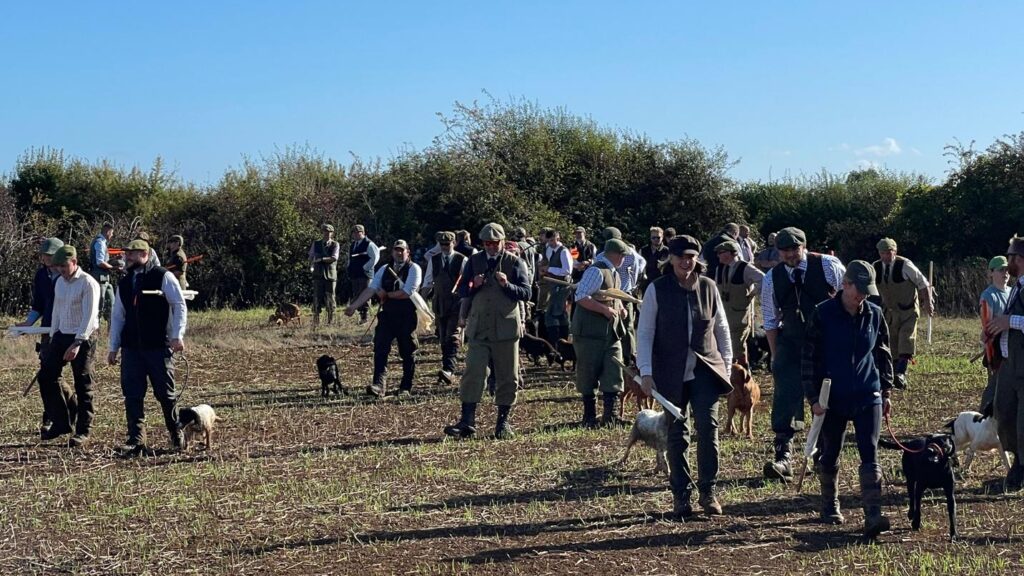
Ponsonby Farms: a day beating for wild grey partridge
BASC’s Sam Walker joins the beaters at Ponsonby Farms in Gloucestershire to see a wild grey partridge recovery, built on shoot management, in action.


Get information on the legal shooting season for mammals and birds in the UK.

Apply for funding for your project or make a donation today

Comprehensive information and advice from our specialist firearms team.

Everything you need to know about shotgun, rifle and airgun ammunition.


Find our up-to-date information, advice and links to government resources.

Everything you need to know on firearms law and licensing.

All the latest news and advice on general licences and how they affect you.


What can you learn from people already managing habitat for wildfowl? We’ve gathered experiences from people in different parts of the UK to share, from creating better habitat to monitoring duck nests.
There’s no need to start from scratch when it comes to wildfowl habitat management. Across the UK, practitioners are testing new ideas, learning what works and sharing that knowledge so others can benefit too.
As part of the BASC Four Seasons campaign, three contributors are sharing what they’ve learned over years of managing habitat for wildfowl: Chichester Wildfowlers and Conservation Association (CWCA), King’s Lynn and West Norfolk Wildfowlers Association (KLWNWA), and James Allsop of Monk Wood Shoot.
No two wetlands are the same and there’s no single recipe for success. That’s what makes sharing practical experience valuable. Each contributor takes a slightly different approach, but all share the time, care and commitment behind supporting wildfowl and the habitats they depend on.
For many clubs, improving habitat has become the priority.
CWCA began moving away from rearing large numbers of mallard in the late 1970s. Instead, members focused on creating the conditions for ducks to breed naturally by improving wetlands. Over the years, that has meant managing reedbeds, planting marginal vegetation and encouraging insect-rich areas, alongside predator management. Today, the club manages 14 wetland projects, with members regularly giving their time to conservation work throughout the year.
KLWNWA has seen a similar shift, with members increasingly focusing on the habitat and welfare of wildlife across their shooting area. James Allsop shares that view, describing habitat creation and management as “key to the successes we are seeing on the ground”. Alongside creating habitat, he highlights the importance of controlling invasive plants and predators for the benefit of wildfowl and many other species.
Behind every thriving wetland are people prepared to give up evenings, weekends and countless volunteer hours to improve habitats. What unites them is a commitment to creating wildlife havens and sharing what they’ve learned with others.

Duck nest tubes play an important role in many projects, but their success depends on much more than simply putting them in place. Years of trial and error have shaped where they’re positioned and how they’re managed.
CWCA uses wire mesh packed with hay, with a layer of plastic sheeting to provide protection from the rain. Tubes are positioned two to three feet above the water on posts or floating rafts, with careful thought given to prevailing winds, changing water levels and the risk of predators. Members also stress the importance of patience, noting that it can take several years before ducks begin using new nesting sites.
KLWNWA follows the BASC duck nest tube design, but that hasn’t stopped members experimenting. This year, they’ve added alpaca fleece alongside hay to see whether it improves nesting success, while continuing to record the results.
James Allsop has also adapted his approach over time. Alongside traditional tubes made from straw wrapped in sheep netting, he’s experimented with other designs, including blue barrels, and is now exploring more permanent woven alternatives. His advice is practical: make sure tubes are securely fixed, avoid placing them where people are likely to disturb nesting birds and never work around water alone.
That experience does not come without commitment. As James Allsop puts it: “It can be hard putting the tubes up, watching them, feeding the ducks, protecting them from predators. But when you see your first brood hatch in one and then jump out into the water – well, that’s reward enough!”
Creating habitat is only part of the story. Some of the most valuable work comes afterwards, when experienced eyes watch how birds respond over weeks, months and years. It’s a role that goes beyond practical conservation. It means becoming a guardian of the wildlife that depends on those habitats, learning what works and adapting with every season.
CWCA photographs its work, shares updates across the club and documents how habitats and nesting sites change over time. Those records help guide future habitat management, while regular updates allow members to share their experiences with others.
At KLWNWA, careful record-keeping has become second nature. Members use the same notebook year after year, building a picture of what has worked, what hasn’t and how nesting success changes over time. Alongside support from the British Trust for Ornithology, they also ring birds, adding valuable information that helps improve our understanding of breeding success, survival and the movements of wildfowl.
Every observation helps build a clearer picture. Wildfowl ringing adds another important piece by improving our understanding of breeding success, survival and migration.
We’re exploring how more BASC members can support this work, whether by training as ringers, providing access to suitable sites or helping on the ground.
Complete our short survey by 30 July and help shape the future of wildfowl ringing.
James Allsop’s regular visits to the ponds mean he notices the small moments that might otherwise pass unnoticed; when a nest tube is occupied for the first time or when ducklings hatch and fledge, for example. Those observations help shape the decisions he makes for the following season.
These contributors demonstrate that good habitat management doesn’t end when the work party goes home. It continues every time someone stops to watch, record or share what they’ve discovered. Whether it’s contributing to BASC’s duck nest monitoring project, submitting sightings through DucklingWatch, participating in BASC’s Wing survey or supporting initiatives such as wildfowl ringing, every observation helps build a clearer picture, ensuring the time and care invested by today’s practitioners continues to benefit those who follow.

Sharing experience encourages others to take the first step.
The contributors featured here have simply shared what has worked on their ground and what they’ve learned along the way. That willingness to exchange ideas helps everyone improve, whether they’re managing an established wetland or putting up their very first duck nest tube.
If you’d like to get involved or share your own experiences, here’s where to start:
Find out more about the BASC duck nest monitoring project
Take part in DucklingWatch
Share your own story through the BASC Four Seasons campaign
Join the Waterfowlers’ Network Duck Nest Monitoring Facebook group

BASC’s Sam Walker joins the beaters at Ponsonby Farms in Gloucestershire to see a wild grey partridge recovery, built on shoot management, in action.

Rising Star finalist Tom Ewin discusses his work in farming and conservation, his interest in deer management and his plans for the future.

If designed well, the new qualification “could carry real weight” for how the next generation understands and interacts with the natural world, says BASC.