Ducks Unlimited – A conservation success story over the pond
A look at Ducks Unlimited, a US-based organisation founded by hunters and dedicated to conserving and restoring wildfowl habitat.

Get information on the legal shooting season for mammals and birds in the UK.
Apply for funding for your project or make a donation today

Comprehensive information and advice from our specialist firearms team.

Everything you need to know about shotgun, rifle and airgun ammunition.


Find our up-to-date information, advice and links to government resources.

Everything you need to know on firearms law and licensing.
All the latest news and advice on general licences and how they affect you.

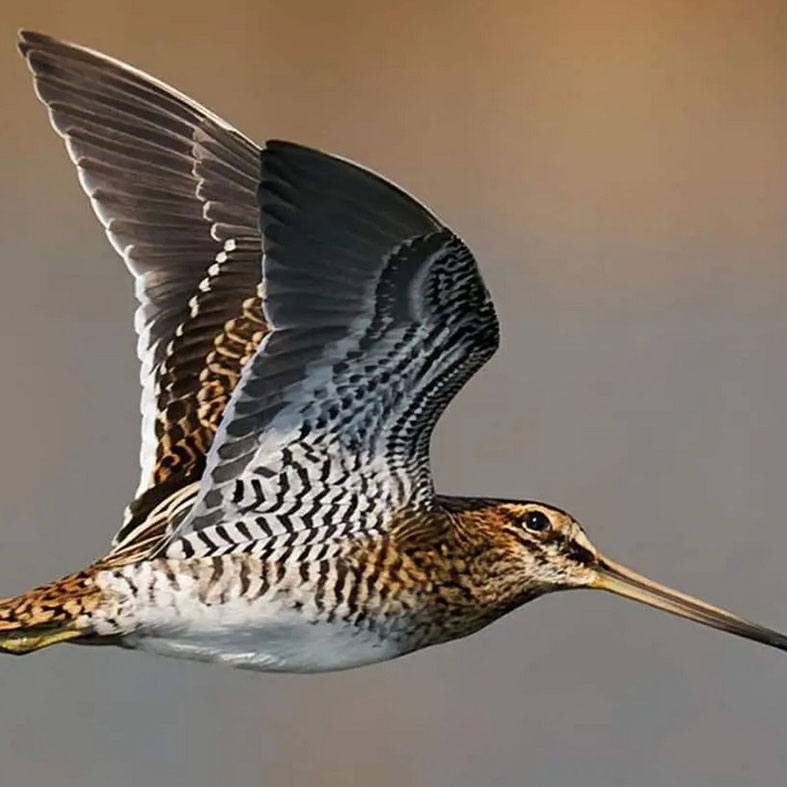

This time, it comes in the form of a government-led review of our quarry species. The review itself was not unexpected, frankly it has been long overdue. What has come as a surprise is the lack of engagement, the inconsistency in approach, and the apparent failure to properly or proportionately interpret the very evidence bases the decisions hinge on.
To understand how we got here, we need to start at the beginning, because context matters.
For decades, successive governments have failed to meaningfully review our quarry species and their seasons. Some shooters might see that as a blessing. In reality, it has left a vacuum, one that has now been filled by increasingly vocal anti-shooting activists.
Pressure was building from Europe to review all huntable species and in the UK a petition led by anti-shooting groups challenged the woodcock season. This prompted the government to commit to a full review of our quarry species. Fortunately, BASC had already begun its own comprehensive review, led by Dr Cat McNicol. What followed was the development of an extensive evidence base, one that left us facing a critical decision. Do we sit back and react to future government proposals, or do we lead?
The answer was clear.
BASC’s Council and our Wildfowling Liaison Committee took the view that a proactive, front foot approach was essential. So we engaged directly with Defra, Natural England, National Resources Wales and NatureScot officials; entering into detailed, constructive discussions around the evidence. In truth, much of that dialogue was positive, and was some of the most refreshing regulator level conversations we’ve had. There was broad alignment, and crucially, openness to a self-regulatory and adaptive outcome.
BASC believes in self-regulation because it works and we have the track record to prove it.
At the time, even the minister appeared receptive to this approach. What that final outcome might have looked like is something we may never know. A general election intervened, and with it came a change in government and a very different tone.
The positive relationship we had built with civil servants in England quickly eroded. Stakeholder engagement disappeared. And despite all the groundwork laid, the consultation was launched without input from those it directly affects.
That is not just disappointing, it is deeply frustrating. We could have delivered something together that focused on the areas where we genuinely could have made a difference. Habitat management, predator control, and a collaborative approach to data collection to ensure future decisions are well informed and well placed. The shooting community is proud of its conservation credentials and a collaborative approach here would have helped to build trust – something that is currently lacking.
When you begin to examine the consultation itself, particularly in England and Wales, concerns only grow. Why such disparity when we are talking about the same species, across a shared flyway? It makes little ecological sense to treat migratory species differently when their movements are driven by weather and wider environmental conditions.
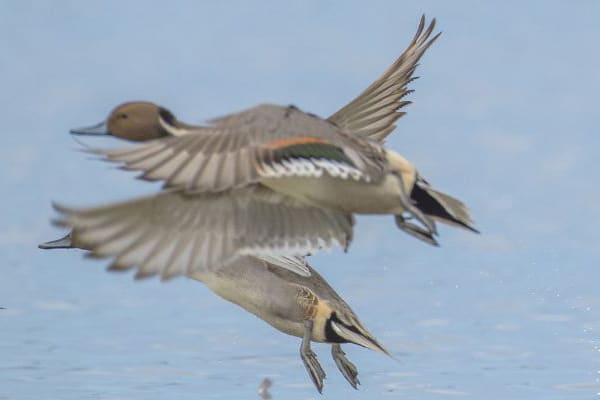
Take snipe as an example. Our harvest is taken from a large overwintering population, yet they are proposed to be fully protected in Wales due to a declining breeding population. One metre either side of an invisible line they could be legal quarry on one side and protected on the other. Then there is pintail, drawn into the debate despite clear guidance from Natural England that no further action is required. It raises serious questions about how, and why, these decisions are being framed.
It begins to look less like evidence-led policy, and more like opportunism at the expense of rural communities.
Over the past two years, we have developed a Sustainable Shooting Code of Practice as part of a wider framework designed to deliver real outcomes. The uptake has been strong, with over 50 percent of affiliated wildfowling clubs adopting the principles within their rules and constitutions in the first year. We are now reviewing ahead of year three, and early indications suggest that number will increase significantly.
Our sector has embraced self-regulation. The code of practice demonstrates that we can manage impacts on UK breeding and overwintering populations responsibly, while also responding to complex challenges of climate change, migratory birds and shifting flyways. The fact that our approach is now being discussed on the international stage through the Waterfowlers Network shows what can be achieved when we lead with evidence and transparency.
This is a dynamic system, not a static one. We are committed to continuously updating the evidence base that underpins our approach, ensuring decisions are guided by the best available science. Reviews every three to five years will ensure it remains relevant, credible, and most importantly, effective.
That is more than can be said for a system that has remained largely untouched for decades. Previous changes, such as the removal of curlew, have not delivered the conservation outcomes hoped for, largely because the root causes of decline were not addressed. Simply removing a species without tackling habitat loss or predation does little to reverse long-term trends. It’s akin to putting a plaster on an arterial bleed and saying: “well at least we did something……..”. We are not a tick box, our migratory wildfowl and our rural way of life deserves better.
It is good to see that this is not being presented entirely as a one-way process, and the inclusion of woodpigeon is welcome. Woodpigeon would be added to the quarry list with an open season from 1 September to 31 January whilst remaining on the general licences for all year-round control. Proposals for other species to be added to the quarry list will be considered.
BASC will continue to build and refine the evidence base and assess all potential quarry species through our framework. That ensures our position remains evidence-led, something that cannot always be said for the consultation as it stands.
The consultation itself acknowledges a precautionary approach, yet also highlights the limits of intervention. The UK sits at the edge of many migratory ranges. When winters are mild and food is available elsewhere, birds simply do not travel as far. This short stopping effect is well understood. At a flyway scale, many populations remain stable, even where UK numbers fluctuate.
If we stop taking a sustainable harvest, will it reverse the decline?
No.
Even within the consultation it is acknowledged that restricting shooting is unlikely to have a major long-term effect on population trends driven by factors outside the UK.
The same applies to pintail. Natural England’s own review concluded that no additional action is required, noting that the current close season already protects the small and localised breeding population, while allowing sustainable harvest of wintering birds.
Yet proposals persist. It would be amusing if it were not so serious.
The real question is not whether a species is declining locally, but what the UK’s role is within the wider flyway, and whether our actions have any meaningful impact at that scale. In many cases, they do not. And where they do, we have acted.
Looking ahead we need a smarter and stronger framework. This is exactly what we have developed.
It assesses species status, analyses population trends, and applies the best available science to guide decisions. It is adaptive, proportionate, and transparent. It recognises that conservation must operate at the correct ecological scale, while also encouraging practical action such as habitat creation, predator control, and the need for better data.
Now is not the time for silence.
This is not a time for apathy. It is a time to engage, to lobby MPs, respond to the consultation, and make your voice heard.
We will be providing the information needed to support that engagement through the BASC website in the coming days.
The foundations have been laid. Our framework and code position us well. Now it is up to all of us to ensure it is recognised and built upon. Let’s hope that once the dust settles common sense prevails.
A look at Ducks Unlimited, a US-based organisation founded by hunters and dedicated to conserving and restoring wildfowl habitat.
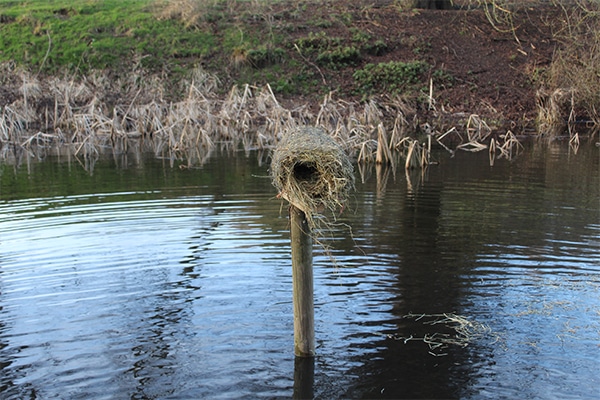
Citizen science will aid understanding of mallard nesting habitat preference in bid to boost numbers.
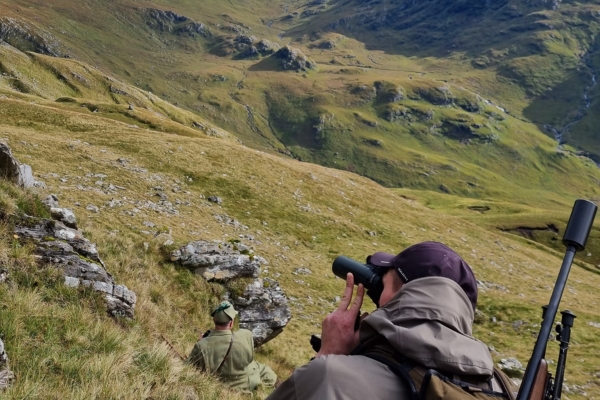
As more organisations engage with the UK’s Living Heritage inventories, the groundwork that secured shooting’s admissibility is bearing fruit.