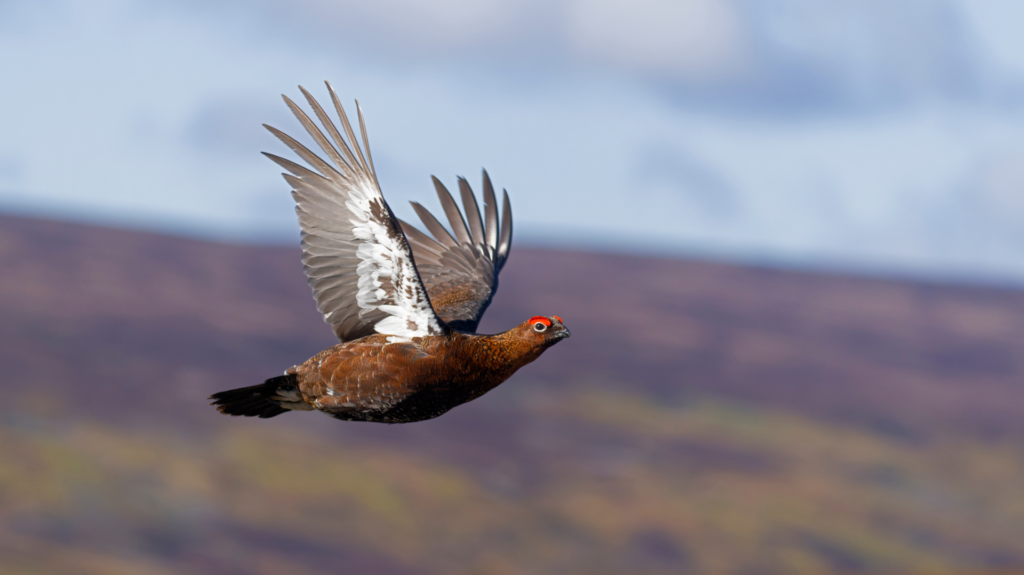
Grouse season opens with bright prospects
Grouse shooting gets under way today, and BASC members heading out on the moor have cause for optimism after two difficult seasons.


Get information on the legal shooting season for mammals and birds in the UK.

Apply for funding for your project or make a donation today

Comprehensive information and advice from our specialist firearms team.

Everything you need to know about shotgun, rifle and airgun ammunition.


Find our up-to-date information, advice and links to government resources.

Everything you need to know on firearms law and licensing.

All the latest news and advice on general licences and how they affect you.


As wildfires once again rage across the country, BASC head of uplands Alex Farrell outlines why controlled burning is part of the solution.
As another spell of hot, dry weather has brought significant wildfires to the UK’s uplands, our first thoughts should be with those on the front line. Fire and rescue services have once again shown extraordinary professionalism and courage, often working in extremely challenging conditions to protect lives, homes and some of our most precious landscapes.
Alongside them, gamekeepers, farmers, estate staff and other land managers have worked tirelessly, often volunteering their time, equipment and local knowledge to help tackle fires before they spread. Their contribution rarely makes the headlines, but it is an essential part of the UK’s response to wildfire.
The recent EFRA Committee inquiry into wildfire heard powerful evidence about the realities faced by those responding to these incidents. It highlighted the concern felt by many gamekeeping families as loved ones leave home to battle fires – often for long hours in dangerous and unpredictable conditions. It is a reminder that wildfire is not simply an environmental issue, it has a very real human impact on the people who live and work in our uplands.
As investigations continue, it is far too early to draw conclusions about the cause of individual fires. However, one thing is becoming increasingly clear: as our climate changes and periods of hot, dry weather become more frequent, we must ensure those responsible for managing our uplands have the practical tools needed to reduce wildfire risk.
Wildfire is not simply about ignition. It is also about what is available to burn. The amount of accumulated vegetation, often referred to as the fuel load, is one of the biggest factors influencing how intensely a wildfire burns and how difficult it is to control.

For generations, land managers have used a range of techniques to reduce this fuel load, including grazing, cutting and controlled burning. Each has an important role to play, depending on the landscape, terrain and conservation objectives. In many of the UK’s remote uplands, where machinery cannot always operate effectively and cutting is often impractical, controlled burning remains one of the most effective management tools available.
Recent years have seen increasing restrictions placed on controlled burning. While these changes have been introduced with the intention of protecting peatlands, there is growing concern that limiting vegetation management in some areas has allowed fuel loads to build, increasing the potential for larger and more severe wildfires.
The irony is difficult to ignore. In attempting to protect our peatlands, we may inadvertently be creating conditions that leave them more vulnerable to catastrophic fire. Unlike carefully planned controlled burns, wildfires burn with extreme intensity, damaging vegetation, scorching peat, releasing significant amounts of stored carbon and devastating wildlife.
It is also important to distinguish between controlled burning and wildfire. Properly conducted controlled burns are cool, fast-moving and carefully managed. They skim the vegetation layer without burning the peat beneath, encouraging fresh growth while reducing the build-up of older, highly combustible vegetation. They are undertaken by trained professionals under an already tightly regulated system and bear little resemblance to the destructive wildfires we continue to witness.
This year’s fires should prompt a balanced, evidence-led discussion about how we improve the UK’s wildfire resilience. BASC believes that means recognising the expertise of gamekeepers and other land managers who care for these landscapes every day and ensuring they have access to the full range of appropriate vegetation management tools.
As climate change increases the risk of wildfire, our focus must be on supporting those who protect our uplands, learning the lessons from this year’s fires and ensuring future policy strengthens, rather than weakens, the resilience of these remarkable landscapes. Protecting peatlands, wildlife and rural communities depends not only on preventing fires from starting, but on managing our landscapes so they are better able to withstand them when they do.

Grouse shooting gets under way today, and BASC members heading out on the moor have cause for optimism after two difficult seasons.

As another major wildfire burns in the Cairngorms, BASC Scotland director Peter Clark explains that preventing large-scale fires must begin long before the first flame appears.

In an open letter to the RSPB chair, BASC calls out the RSPB’s “increasingly negative” public attitude towards sustainable shooting.