
You hear them before you see them
The BASC Wildlife Fund is supporting ground-breaking work to conserve black grouse. Fund trustee John Furbisher went to check on progress.


Get information on the legal shooting season for mammals and birds in the UK.

Apply for funding for your project or make a donation today

Comprehensive information and advice from our specialist firearms team.

Everything you need to know about shotgun, rifle and airgun ammunition.


Find our up-to-date information, advice and links to government resources.

Everything you need to know on firearms law and licensing.

All the latest news and advice on general licences and how they affect you.
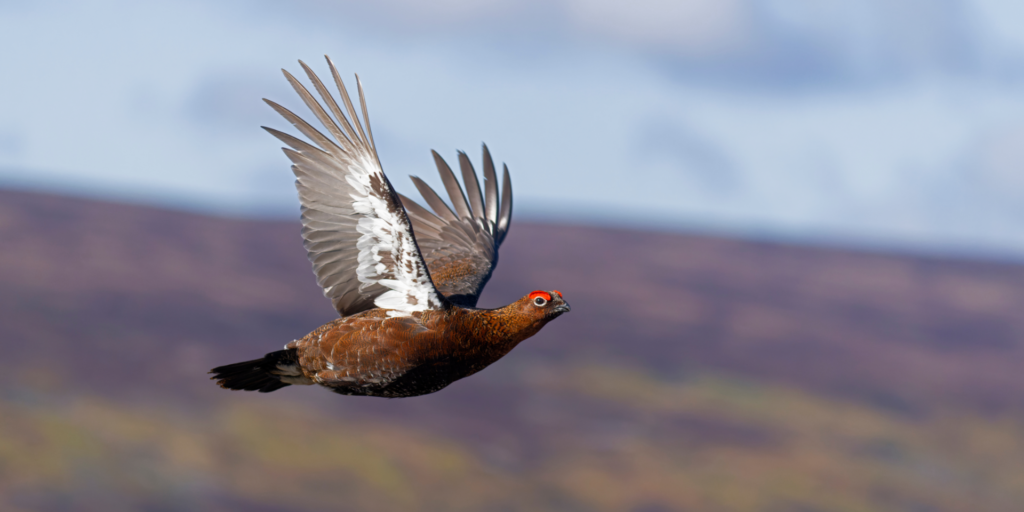
Grouse shooting gets under way today, and BASC members heading out on the moor have cause for optimism after two difficult seasons.
Brood counts across many well-managed moors in northern England and southern Scotland have improved markedly this summer, with keepers reporting some of the strongest averages seen since 2023. That follows a cold, wet spring in 2024 which caused widespread nest failures, and only partial recovery last year. As ever, the picture varies by region and even between neighbouring moors, so members are encouraged to base their own expectations on local counts rather than the national trend.
The recovery reflects work that goes well beyond producing birds for a day’s shooting. It starts with understanding the moor — monitoring bird numbers and breeding success, managing habitat, watching for disease, controlling predators where appropriate, and knowing when a population can sustainably support shooting and when it cannot. The aim is never to take as many birds as possible, but to manage a sustainable surplus while keeping the wider ecosystem healthy and resilient.
There are a few things you may notice out on the moor this season that reflect just how much of that work has gone into getting there.
To begin with, you may well spot patches of ground where the heather has had its leaves eaten away, leaving bare red or grey stalks, or has died completely. The likely culprit is the heather beetle, a camouflaged insect barely bigger than a grain of rice whose larvae strip heather bare through July and August, usually becoming visible by early autumn. Outbreaks have become more frequent and severe in recent years, with a warming climate thought to be creating more favourable conditions for beetle populations to build up.
For grouse, that means less of the young heather shoots they rely on for food, and less of the dense cover chicks need to shelter and hide from predators — so birds are often pushed onto smaller areas of unaffected ground, reducing the number a moor can sustainably support.
Another challenge for keepers will come as no surprise: the weather, which has, again, taken its toll. July 2026 was the driest for England and Wales since records began 190 years ago, according to the Met Office, and the Environment Agency confirmed only this week that 71.3 per cent of England is now in drought. That’s brought a heightened wildfire risk to upland areas. Fire and rescue services in England and Wales have already responded to 966 wildfires this year, including 185 in the first 10 days of August alone.
“This summer is a good example of just how much the job’s asking of upland keepers,” said Alex Farrell, BASC’s head of uplands. “Some have spent as much time fighting fires as getting the moor ready for the season — on top of everything else. It’s not an easy job and it’s getting harder.”

For all that, the job goes on, and for good reason. The Value of Shooting report found the sector is worth £3.3 billion to the UK economy each year, with shooters spending £4.4 billion annually through UK-based suppliers.
“A shoot day isn’t just about the Guns,” Farrell said. “You’ve got 40 or 50 people out there — beaters and pickers-up, for example — all spending money that supports local hospitality, shops and businesses right across the area. Shooting carries these communities through the quieter months.”
The benefits go even further. According to the results of that same report, three in four participants say shooting is important to their personal wellbeing, with most reporting it contributes positively to their physical and mental health. Those benefits are estimated to save the NHS and local authorities millions of pounds a year in avoided healthcare costs.
Still, grouse shooting has its critics, and members should be alert to the possibility of disruption from saboteurs this season. Brief your team beforehand, don’t engage if it happens, and call 999 giving your exact location. It’s worth reading our full advice before you head out.
12 August may be the date that gets the attention, but it’s the work carried out across the rest of the year and the continued investment from landowners that makes it possible.
The recovery this season is positive, but it remains fragile, and the coming weeks will tell us a great deal more about how it unfolds. As ever, we’d love to hear how your own season is shaping up, whether that be shooting, beating, picking up or loading.
The BASC Wildlife Fund is supporting ground-breaking work to conserve black grouse. Fund trustee John Furbisher went to check on progress.

BASC is leading the fight for driven grouse shooting ahead of a parliamentary debate on 30 June on calls to ban it.

BASC commits £75,000 towards Natural England’s hen harrier recovery work, via its Legacy Fund.