
‘Call of the Marsh’ premieres in Parliament
Cross-party MPs and peers joined regulators, conservation bodies and wildfowlers to see ‘Call of the Marsh’, a new documentary from BASC and the Origins Foundation.


Get information on the legal shooting season for mammals and birds in the UK.

Apply for funding for your project or make a donation today

Comprehensive information and advice from our specialist firearms team.

Everything you need to know about shotgun, rifle and airgun ammunition.


Find our up-to-date information, advice and links to government resources.

Everything you need to know on firearms law and licensing.

All the latest news and advice on general licences and how they affect you.

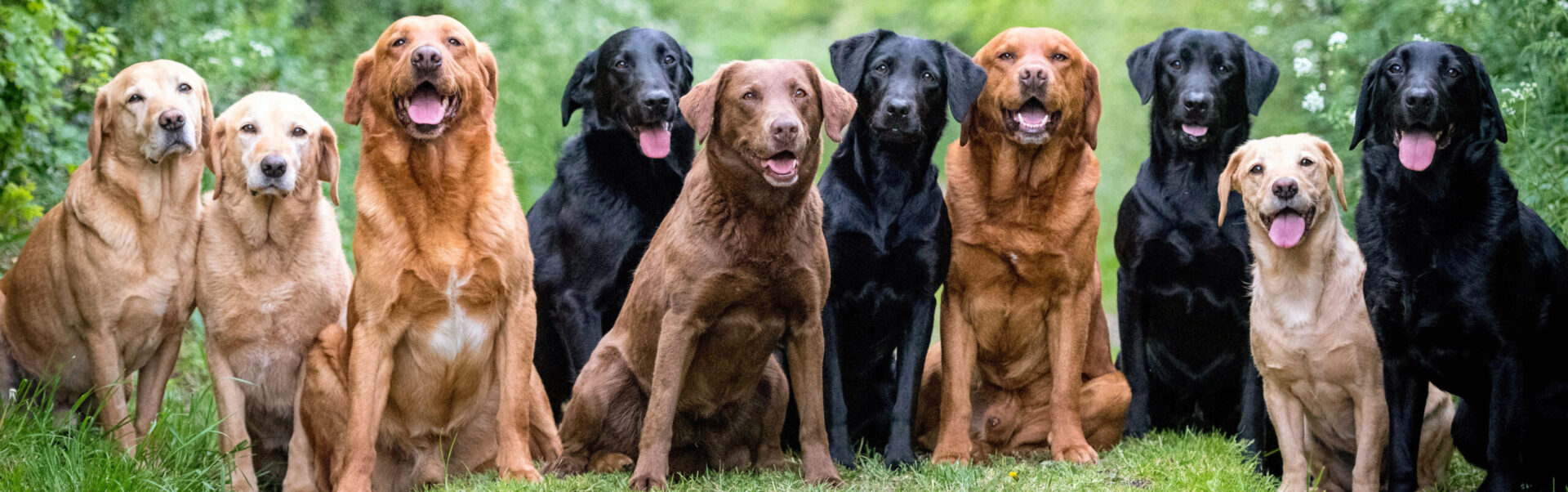
Rural people are no more uniform than anyone else, says BASC’s head of social science Patrick O’Reilly. He explains why rural minister Jenny Riddell-Carpenter’s pubs and Labradors remarks missed the point about rural Britain.
I am neither a farmer nor a shooter. Over the course of my career, however, I have had the good fortune to live in and learn from numerous rural communities. As well as teaching me the dangers of firing from the hip on rural issues without understanding the facts, these communities have shown me two things.
The first is their similarity. Globally, rural communities face the same pressures. Incomes are squeezed. Services and opportunities are disappearing. The merciless economics of agriculture, climate change and complex regulation bear down on rural life.
The second is their diversity. Terms like “coping mechanism” scarcely do justice to the multitude of ways rural households in different landscapes adapt in order to feed and educate families, sustain businesses and maintain communities. Good researchers recognised long ago that rural communities are knowledgeable and innovative. Astute policymakers understand that empowering these communities goes a long way towards delivering positive change. This is a long way from the attitudes I encountered at the beginning of my career, when rural communities were often portrayed as resistant to, even incapable of, independent change.
I see this every day, travelling the UK and learning about ways of life and forms of deeply rooted knowledge of communities as varied as the landscapes they live in. One thing is clear. Rural life is about more than income and assets. When I ask people why they persevere in the face of enormous pressures, I hear the same answer: “It’s who we are.” That means different things to different people, but it speaks to genuine rural identities of intrinsic value which people go to extraordinary lengths to maintain.
I also see the challenges. Farmers speak of falling incomes and collapsing revenue from food production. They struggle to see a future for their farms. They are frustrated by red tape and official indifference. This is not just about farming. Small rural businesses paint a stark picture of declining economic opportunities, infrastructure shortfalls, pub closures, limited employment and services. Local difficulties don’t stay local. They generate national concerns about issues including food sovereignty, environmental degradation and inadequate service infrastructure.
Shooting features in these conversations as one of the few viable diversification options available, as an incentive for participation in environmental schemes, as a cost-effective mechanism for nature recovery and as one of the few social outlets available to many during the winter. Far from the lazy caricatures of “toffs in tweed” despoiling nature, the story is of shooting embedded in rural life, bound into employment, land management, conservation, community and culture. Our members have always got this: shooting isn’t detached from the wider rural world, but is a fundamental part of it.
That is reflected in the work BASC does, in advocacy that highlights shooting’s capacity to support rural life and in applied work that delivers on this proposition. This involves a lot of unglamorous work, such as collecting evidence about the costs and benefits of shooting, presenting that evidence to sceptical audiences, and helping members navigate increasingly complex regulation. It also involves having difficult conversations with those who might disagree with us. As befits our status as “Leaders in the field” this involves robust argument and considerable restraint, resisting pressures to get dragged into shouting matches, ignoring deliberate and accidental provocations, focusing on evidence, not recrimination.
To make the case for shooting, we focus on building bridges rather than burning them. We talk to policymakers, meet government agencies and attend political conferences. We don’t go into this work expecting a parade, but because engagement matters. The past two years have only made me more convinced of the importance of this work. Our rural world deserves workable and fair policies. Polarisation makes this harder to achieve. Dialogue makes it easier.
In this context, words matter. Those speaking from positions of influence have a particular responsibility. Casual remarks from prominent figures can quickly become tropes in bad-tempered online debates.
This is why minister Jenny Riddell-Carpenter’s comments at BASC’s reception at the Labour Party Conference were so poorly judged. The event was an opportunity for constructive engagement on rural policy. Instead, her remarks became the story, and a distraction from the issues the gathering was meant to address.
The remarks attracted a great deal of criticism, and the minister has since said she does not consider country pubs or Labradors far right. I have no wish to add to the rancour. But the language cast familiar parts of rural life (a pub, a pint, a Lab) as the ground on which rural people might be drawn towards the far right.
That is not the countryside I have seen in 40 years of working on rural issues. Aside from a shared love of the land, rural communities are made up of people more than capable of picking a fight with their own shadows. Ask 50 shooters for a nostalgic story and you will get 50 different tales.
The same goes for farmers, farriers and fishers. Rural people are no more politically or culturally uniform than anyone else. Some drink ale in pubs, assuming they can find one that is still open; others don’t. Some own Labradors, some prefer cats. Some hunt, some shoot, some oppose both. They vote Labour, Conservative, Liberal Democrat, Green, Reform and Count Binface. Many are passionate egalitarians: they think all politicians are the same. Ironically, the minister’s use of these symbols did precisely what she warned against. It divided the countryside into acceptable and suspect identities.
There is another irony. At a time when rural areas face enormous challenges, a speech about policy ended up not being about policy at all. That is a pity. BASC wants real policy conversations: about the role shooting plays in the future of the countryside, about the conservation work it delivers and about shooting as voluntarism in action.
If ministers are truly concerned about alienation and extremism in rural Britain, those are the conversations to start. Our invitation to the minister to spend a day with us in the field stands, and I hope she takes it up.

Cross-party MPs and peers joined regulators, conservation bodies and wildfowlers to see ‘Call of the Marsh’, a new documentary from BASC and the Origins Foundation.

BASC has rejected Defra minister’s comments on the countryside at the Labour Party Conference this week and invited her to see rural life first-hand.

The government is reviewing every aspect of game shooting in England. Conor O’Gorman provides an update and urges people to email Defra by 1 November.