
‘Call of the Marsh’ premieres in Parliament
Cross-party MPs and peers joined regulators, conservation bodies and wildfowlers to see ‘Call of the Marsh’, a new documentary from BASC and the Origins Foundation.


Get information on the legal shooting season for mammals and birds in the UK.

Apply for funding for your project or make a donation today

Comprehensive information and advice from our specialist firearms team.

Everything you need to know about shotgun, rifle and airgun ammunition.


Find our up-to-date information, advice and links to government resources.

Everything you need to know on firearms law and licensing.

All the latest news and advice on general licences and how they affect you.


BASC director of firearms, Bill Harriman, discusses the HMICFRS’ call for a single firearms licensing authority and why other recommendations in its report are being firmly rejected.
His Majesty’s Inspectorate of Constabulary and Fire & Rescue Services’ (HMICFRS) published its long-awaited report into firearms licensing in England and Wales at the end of August. With 23 recommendations in what was HMICFRS’ first report into firearms licensing since 2015, the most important for BASC is that within two years, the Home Office should establish a fully operational single firearms licensing authority.
Our teams were aware the report was coming, having assisted with the inspectorate’s fieldwork last year. It’s important to note, however, that HMICRFS’s recommendations are not binding on either the police or government. Consequently, HMICRFS neither makes law nor establishes public policy.
The inspector who led this report is Lee Freeman, formerly Chief Constable of Humberside. In his forward, he refers to the police-administered firearms licensing system as “… not fit for purpose”. These are powerful words which should really strike a chord with government.
Firearms licensing may be the mechanism whereby many people are enabled to pursue their sport or livelihoods; however, it is principally undertaken for public safety by ensuring – so far as is possible – that unsuitable people have no access to guns. By deeming it unfit for purpose, Mr Freeman merely confirms what shooters have known for many years, that public safety is being put at risk by a failing system.
The report’s key recommendation is that the Home Office should establish a fully operational single firearms licensing authority. Among other things, this would have central control of decision making, standardised training, and be subject to independent inspection. This is all good stuff and very sensible, but I am uncertain as to the level of political appetite for this at the moment. Also, I think the suggested timeframe is probably unrealistically short. Nevertheless, it is a statement by an influential national body that the current model of 43 independent police forces with all the inconsistences inherent in that, has got to change.
As part of its political work, BASC will be looking to find cross-party political support for this idea within Parliament. We will also promote it elsewhere. This has been a long-term aim for BASC since it was last mooted in 1992 and it is heartening to see it resurrected as it represents a massive opportunity for shooting sports.
Much less welcome is the recommendation that Section 2 shotgun licensing be aligned to Section 1 firearms, such as rifles. We have been around the block with this before with the Home Office Minister facing huge cross-party opposition from MPs in the Westminster Hall debate last February.
Given that, I wonder why HMICRFS has raised this? I think the answer is simple, Section 2 to Section 1 has been top of the police legislative “shopping list” for at least 35 years and HMICRFS appears to have been gulled into asking for it by police sources. Certainly, it adduces no evidence to support its inclusion – instead it concludes with the blunt assertion that “we consider the alignment of the Section 1 and Section 2 licensing regimes is necessary and proportionate”. I take a differing view, it is neither.
Making such a contentious recommendation without any evidence to back it damages HMICRFS’s integrity and credibility. It is hard for the inspectorate to assert its position of independence when it appears to be peddling a discredited police line. The fact that this is not reinforced with empirical confirmation suggests that it is not evidence-led either.
In fact, many other recommendations within the report are not evidence-led or are predicated on single awful cases, rather than patterns or trends. The old legal maxim of ‘Hard Cases Make Bad Law’ appears to have passed HMICRFS by.
The contents of the report does however provide substantial evidence that the police-run firearms licensing system is fragmented, inconsistent in application and poorly-governed. There is nothing new there; these are functions of 43 independent licensing authorities.
More seriously, they expose failings in the organisation and delivery of licensing with inconsistent checks and decision making, variable supervision, different approaches to risk, training deficiencies and a “legacy” national IT system. In fact, the whole structure is fundamentally flawed and wholly irreparable.
Whilst much of the report lists police shortcomings, it often uses them as a stalking-horse to justify calls for either new regulation or legislation. Put simply, the police will say they are failing because the law needs changing.
BASC will always oppose this spurious conflation and require anyone who advocates change to back their call with hard evidence to prove any contention to a high standard. For too long now, firearms law and policy has developed piecemeal, often on the back of single tragic cases. This needs to change; such an important function must be evidence-led.
Like many other documents, the HMICRFS report represents both threats and opportunities. BASC will continue to fight against the threats whilst grabbing the opportunities by the scruff of the neck and using them to help create a licensing system that is effective, consistent and fair.

Cross-party MPs and peers joined regulators, conservation bodies and wildfowlers to see ‘Call of the Marsh’, a new documentary from BASC and the Origins Foundation.

Patrick O’Reilly, BASC head of social science, draws on 40 years of rural work to explain why ministers should swap symbolism for real policy conversations.
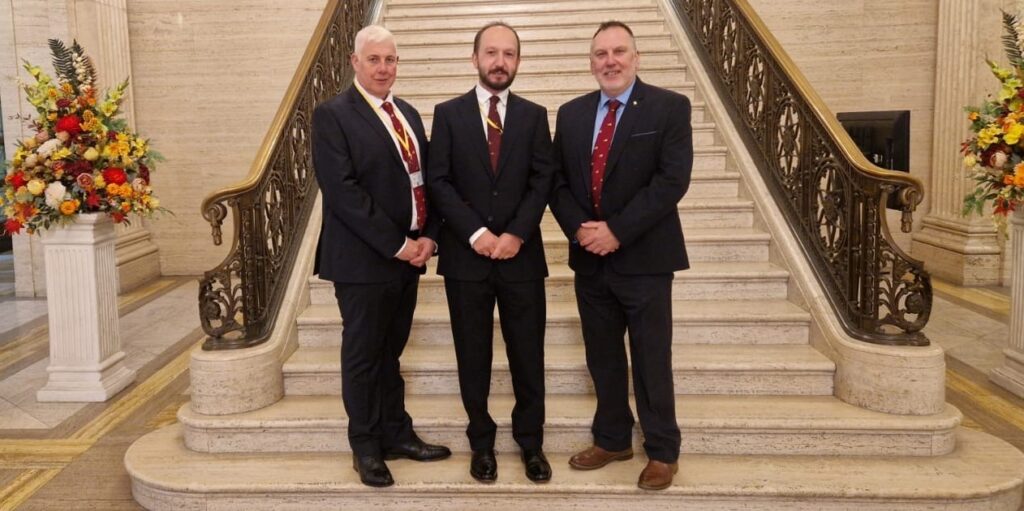
BASC has told the AERA Committee that the Hunting with Dogs Bill is unworkable due to its implications for firearms holders, dog owners and landowners.