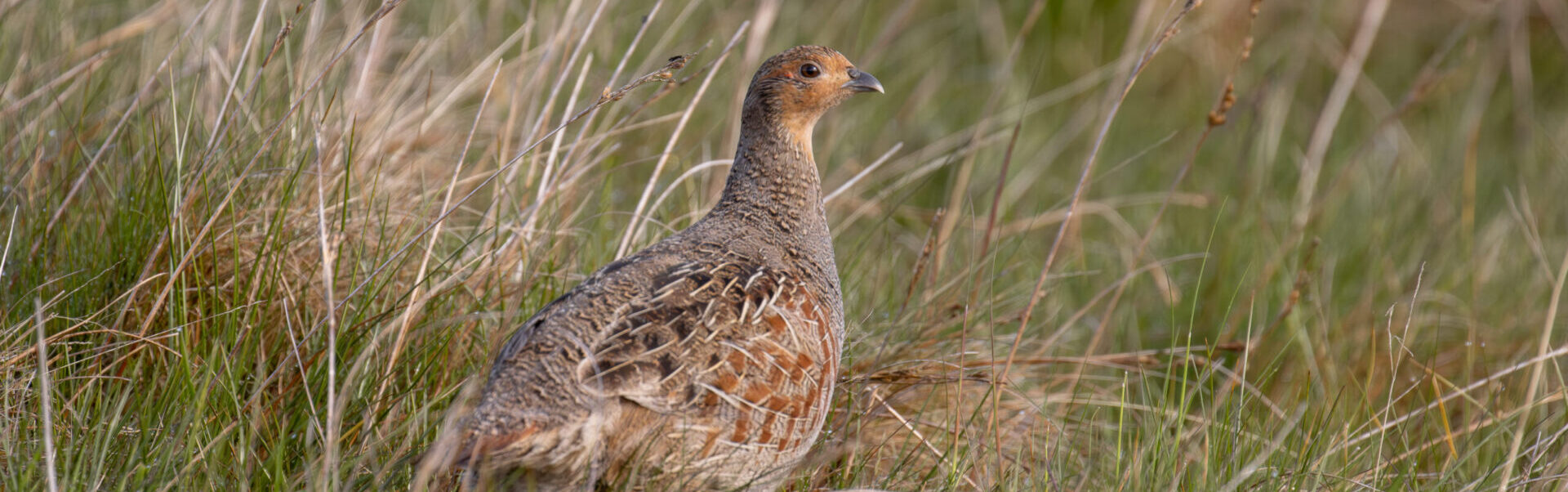
Ponsonby Farms: a grey partridge recovery story

Grey partridge recovery is rarely about a single intervention. It requires the right combination of habitat, food and effective predator management, delivered consistently over time. At Ponsonby Farms in Gloucestershire, that approach is delivering remarkable results, as this case study explains.

Transforming the fortunes of wild partridge

George Ponsonby farms around 3,500 acres through a mixture of owned, rented and contract-farmed land. He runs a shoot on 1,500 acres of this.

It isn’t what might traditionally be considered classic grey partridge country, with mixed soil types and significant areas of woodland. Yet George’s passion for the species has driven a long-term recovery project which, working initially with keeper Frank Snudden and now with Niall Wright, has transformed the fortunes of its wild partridge.

The approach is based around the three essential elements needed to give grey partridge the best chance of thriving: habitat, insects and predator management.

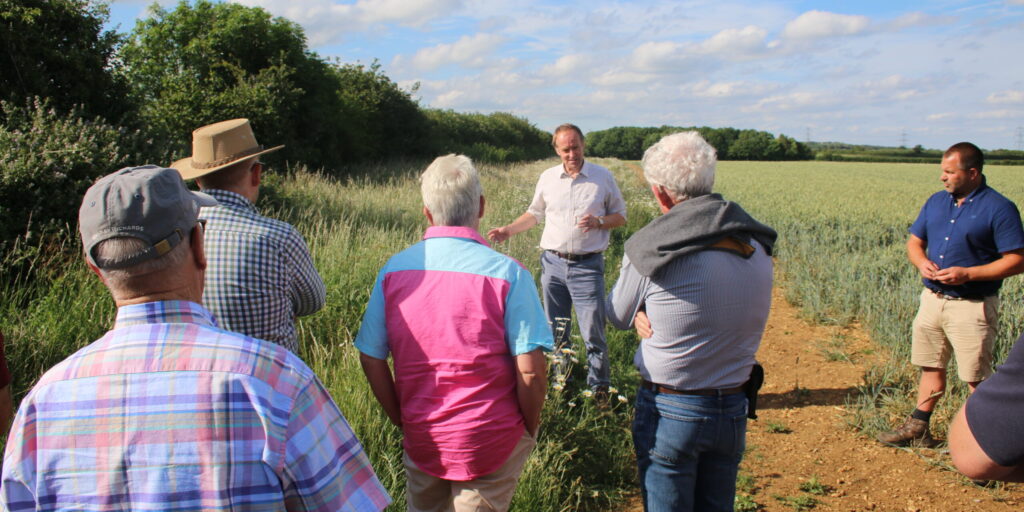
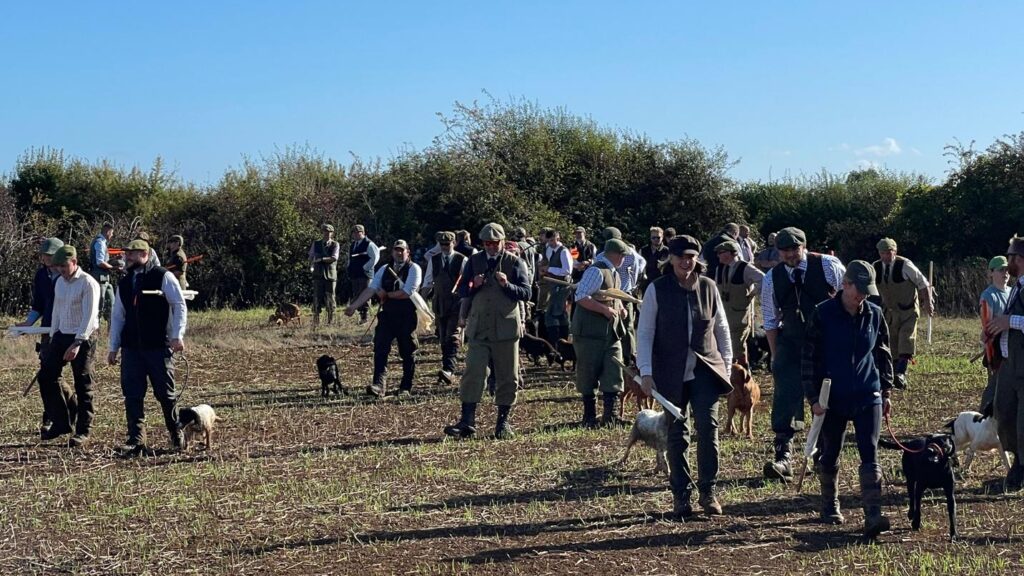
George explaining to visitors how the farm integrates conservation with the wider farming enterprise, driven by his love for grey partridge and wildlife in general.

Building the right habitat

Ponsonby Farms has made extensive use of environmental schemes to establish habitats that provide food, cover and nesting opportunities at different times of the year.

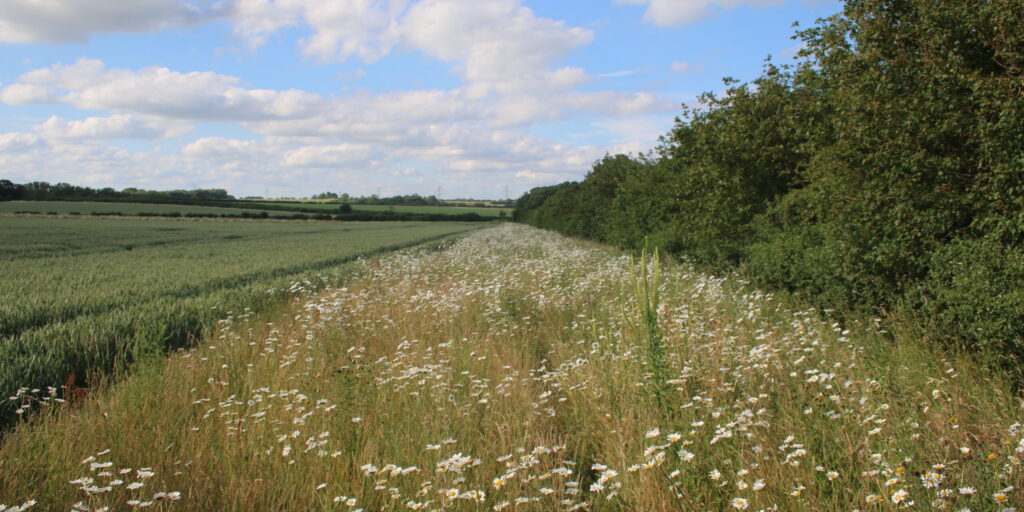
There are 49 hectares of flower-rich covers (AB8) which are particularly important for producing insects when farmland bird chicks need them most. In addition, there are 30 hectares of winter bird food cover (AB9) providing valuable winter food and shelter. Combined, these options cover 14% of the total farmed land.

The farm has also established 12 beetle banks across its larger fields. These provide nesting cover, as well as habitat for insects and spiders which can move into the crops during spring. They also provide nesting opportunities for species associated with open farmland, including skylark and corn bunting.

Interestingly, grey partridge will sometimes choose beetle banks over hedge banks, potentially because they offer better protection from predators.

More recently, new Sustainable Farming Incentive agreements across the farms have increased the use of overwinter cover crops. George believes these have been particularly beneficial to the partridge, with winter losses now at their lowest level by some margin.

Some of the 49 hectares of flower-rich covers on the farm.

Giving insects a chance

Habitat is only part of the equation. Grey partridge chicks need a plentiful supply of insects during their first weeks of life, making insect abundance fundamental to successful breeding.

George has therefore pursued a policy of reducing and, where possible, stopping the routine use of insecticides on the arable crops. Instead of relying on preventative applications, the aim is to allow insect populations to flourish.

The benefits are intended to extend beyond partridge. The flower-rich areas provide food and habitat for pollinators, while insects and other invertebrates support a much wider range of farmland wildlife.

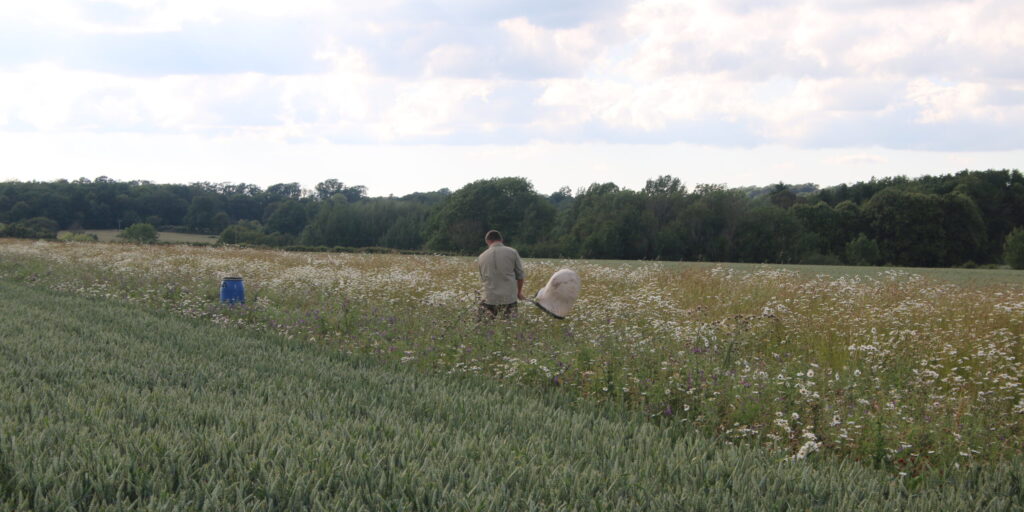
Niall taking a sweep-net sample to check insect abundance in a beetle bank. Insects are a critical chick food source that enables them to survive and fledge.

Protecting breeding birds

The third leg of the stool is predator management.

Rats, crows and foxes are controlled from March through to July, when ground-nesting birds are at their most vulnerable. This targeted seasonal approach is designed to reduce predation pressure during the critical breeding period.

The result is a farm where grey partridge have access to nesting habitat, food and winter cover, while the pressures on breeding birds are actively managed.

From 17 pairs to 159

Spring pair counts have increased dramatically, from around 2.8 pairs per square kilometre in 2017 to 26.5 pairs per square kilometre in 2026. Or, to look it at in gross numbers, it has gone from 17 pairs on the shoot in 2017 to 159 pairs in 2026.

George partly attributes the latest increase in pairs to the new SFI agreements and overwinter cover crops, which have helped increase suitable habitat on the shoot. And it’s not just grey partridge benefiting.

In 2020, Ponsonby Farms commissioned ornithologists Neil Harris and Matt Wilmot to undertake a winter bird survey. They found significant numbers of several declining and threatened farmland bird species, with bird concentrations in the surveyed areas considerably higher than in the surrounding countryside. The surveyors specifically identified the grey partridge recovery project as having wider benefits, particularly for skylark, yellowhammer and corn bunting.

The farm’s commitment to conservation was recognised in 2022 when Ponsonby Farms won the Purdey Gold Award for Game and Conservation.

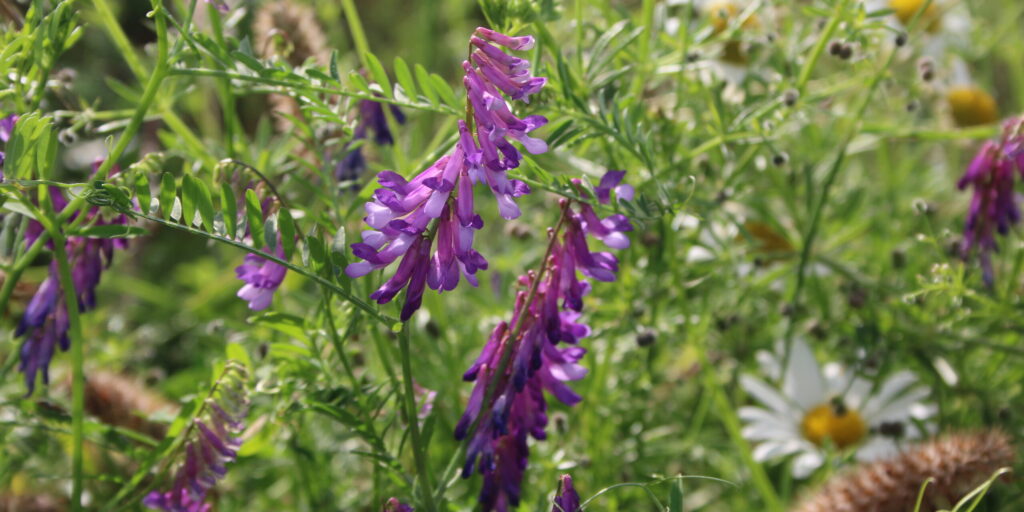
Vetches and oxeye daisy are typical species in a wildflower-rich cover crop as they provide what insects need to thrive, and in turn what grey partridge chicks need to eat.

Takeaway

Ponsonby Farms demonstrates an important principle of farmland conservation: what works for grey partridge can work for much more than grey partridge.

By combining habitat creation, insect-rich farming, overwinter cover and targeted predator management, a farm that was not considered classic partridge country has created the conditions for a thriving wild population, while delivering benefits for a much wider range of farmland wildlife.

Visit BASC’s Four Seasons campaign page for more case studies on the positive impact sustainable shooting has on biodiversity.

Share

Privacy Overview

This website uses cookies so that we can provide you with the best user experience possible. Cookie information is stored in your browser and performs functions such as recognising you when you return to our website and helping our team to understand which sections of the website you find most interesting and useful.