Shooting to protect the environment
Earlier this month, Defra updated its position on protecting 30 per cent of land for nature in England by 2030, and it turns out, they need shooting. Ian Danby explains.

Get information on the legal shooting season for mammals and birds in the UK.
Apply for funding for your project or make a donation today
Comprehensive information and advice from our specialist firearms team.

Everything you need to know about shotgun, rifle and airgun ammunition.


Find our up-to-date information, advice and links to government resources.
Everything you need to know on firearms law and licensing.
All the latest news and advice on general licences and how they affect you.

The government has made it clear that Natural England must change its approach, and a good first step would be adopting decision‑making that genuinely supports sustainable shooting, argues Dr Conor O’Gorman.
The UK Nature Conservancy was established in 1949 to provide scientific advice, manage nature reserves, and protect Sites of Special Scientific Interest.
It was the first national body of its kind for nature conservation and worked closely with the Wildfowlers’ Association of Great Britain and Ireland (WAGBI) on wildlife research and other projects.
With the advent of devolution in the home nations, the Nature Conservancy Council continued that role at Great Britain level, followed by English Nature for England.
I may be looking back with rose‑tinted glasses, but there was, in truth, an excellent working relationship between these agencies and WAGBI and subsequently BASC. This was built on civil servants who genuinely understood shooting and the realities of rural management.
In 2006, English Nature, the Countryside Agency and parts of the Rural Development Service merged to become Natural England (NE).
The ambition was a more ‘joined up’ approach to balancing the protection of nature with economic growth and the needs of rural communities. This was a tall task and perhaps if NE had stuck diligently to its remit and not been drawn into all sorts of off-piste projects and initiatives it would arguably not be in the mess it finds itself today.
Concerns about NE have been growing for years, culminating in a recent National Audit Office (NAO) review that highlighted multiple key failings.
BASC’s head of law Alex Murray summed up the findings saying: “The NAO is clear that this risk-averse culture, reinforced by fear of legal challenge and a lack of direction from Defra, is not delivering the best results for nature or for those who are regulated. That approach is simply not fit for purpose if they are serious about nature recovery”.
Following on from the NAO report, last week the government published a new Strategic Policy Statement which sets out expectations for NE. The message was clear – NE must address its over-precautionary culture.
Wildfowling clubs have long experience of NE’s over-precautionary approach to consents. The increasingly restrictive approach appears to be driven largely by a desire to minimise the risk of legal challenge from anti-shooting campaign groups, rather than by a balanced assessment of conservation priorities.
BASC’s head of wildfowl and wetlands, James Green, explained: “Wildfowling rarely, if ever, features in site improvement plans, yet it is the only activity whose consents are scrutinised by a national review panel and has a dedicated advisory group. This level of oversight is disproportionate when compared with other site activities that have greater ecological impacts but receive far less scrutiny”.
The staffing costs associated with reviewing wildfowling consents and attending advisory group meetings are significant. This represents a poor allocation of NE resources, particularly when the process delivers little or no measurable conservation benefit.
NE’s current approach to regulating wildfowling has alienated a community that should instead be seen as a key conservation partner – as was largely the case with its predecessors.
NE’s over-precautionary approach, long suffered by wildfowlers, has never really grabbed headlines outside our bubble, but that changed when the same principles were applied to pest bird control.
In 2014, NE proposed draconian conditions on the various general licences requiring people shooting a pigeon or a crow to have tried non-lethal methods of control before taking a shot.
The plans were dropped after a huge backlash from shooters and farmers popularised in the mainstream media as ‘shoo’ before you shoot.
However, the rot of red tape within NE continued, with general licences that became increasingly complex year after year, drafted through a legal prism rather than consideration for the end users who needed to be sure they were acting legally.
Then, in April 2019, NE dropped a bombshell, suddenly revoking the main general licences in a panic after a tentative legal challenge by Wild Justice. Those general licences were re-issued after BASC’s intervention, but not before an estimated cost of at least £29 million in damages to the countryside.
The general licences in England continue to be overly complicated and the individual licensing system is not fit for purpose for applicants needing to control various bird species in a timely manner.
It gets worse.
Recently, only weeks after the High Court granted permission for BASC’s judicial review of NE’s licensing regime for gamebird releases on or near Special Protection Areas (SPAs) the quango seemingly doubled down, announcing further spurious restrictions for the 2026 season.
NE has added more SPAs to a list of sites where it has stated that it’s unlikely to issue individual release licenses to applicants.
Why? Because NE has suddenly alleged unevidenced concerns about gamebirds being infected with avian flu and passing that onto overwintering woodlark populations.
Yet, in a recent stakeholder meeting NE admitted that not a single woodlark has ever been recorded with highly pathogenic avian influenza in Europe or in the UK.
The Breckland SPA, spanning 152 square miles across Norfolk and Suffolk, is amongst the ‘woodlark worry’ sites subject to NE’s latest de-facto gamebird releasing ban, impacting dozens of shoots.
It’s 20 years since the last winter woodlark survey in that area – with approximately 100 birds recorded on farmland in the winter of 2005–06.
Removing shooting interests reduces predator control efforts and that increases the risk of breeding failures for the vulnerable bird species that are meant to be protected by SPA designations. As a case in point stone curlews in the Breckland SPA benefit from fox control by gamekeepers employed by shoots which is well evidenced and acknowledged by RSPB.
In discussions about the damaging impact of its approach NE claimed that predator management in SPAs can instead be funded by different available financial mechanisms rather than shooting.
When BASC submitted a Freedom of Information request to NE asking for information about this funding NE replied explaining it was unwilling to send us that information because they would be unable to find it from an electronic search and its staff would instead need to review cases manually.
Dr Marnie Lovejoy, an environmental lawyer and BASC’s deputy director of conservation, commented: “Natural England is damaging nature recovery in banning game shooting by the back door in the very places that need our conservation efforts the most.
“The rich biodiversity that shoots support through habitat work and targeted predator control is exactly what Special Protection Areas need and why they exist.
“These conservation efforts, spanning generations, by shoots and farmers, are why many of these sites were designated for their biodiversity. We will continue to challenge restrictions that are not supported by clear evidence”.
NE recently announced that their CEO Marian Spain will retire later this year after 8 years in post, which could be a turning point. NE must now address wider problems in its regulatory culture, particularly its overly precautionary approach to decision-making.
In principle, BASC and NE share the same aims for conservation and the sustainable use of natural resources and we have worked in partnership on many projects and we continue to do so. The countryside needs an environmental regulator like NE but not one acting in the way NE is currently.
Despite all the barriers put up by NE, the shooting community continues to deliver for nature recovery daily on the ground.
NE can begin to restore its reputation in our sector by doing the following:
Earlier this month, Defra updated its position on protecting 30 per cent of land for nature in England by 2030, and it turns out, they need shooting. Ian Danby explains.
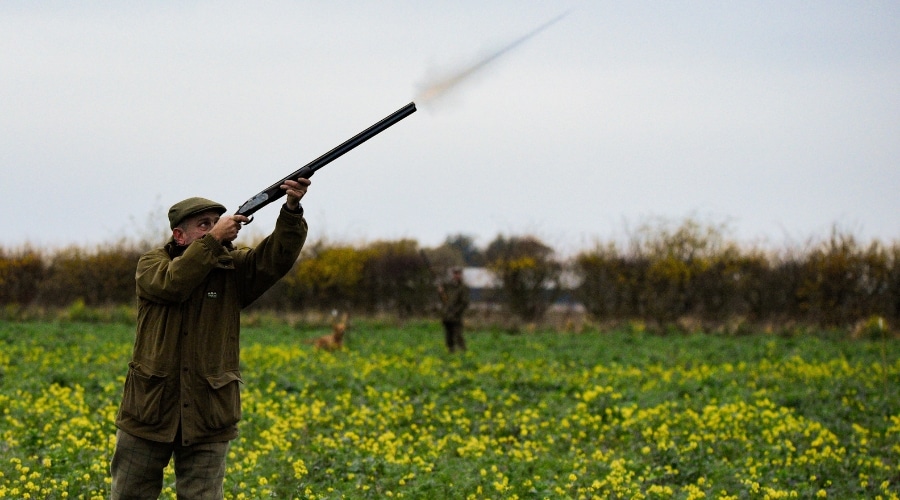
BASC’s research team are working with the University of Exeter to look into the changes in game bags over time.
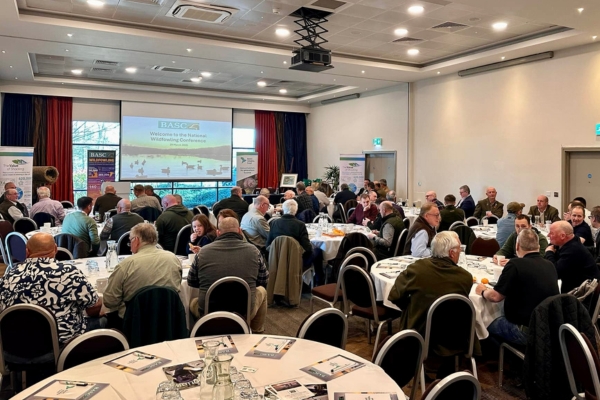
The 2025 BASC National Wildfowling Conference returned on Saturday 29 March, attracting more than 100 delegates.