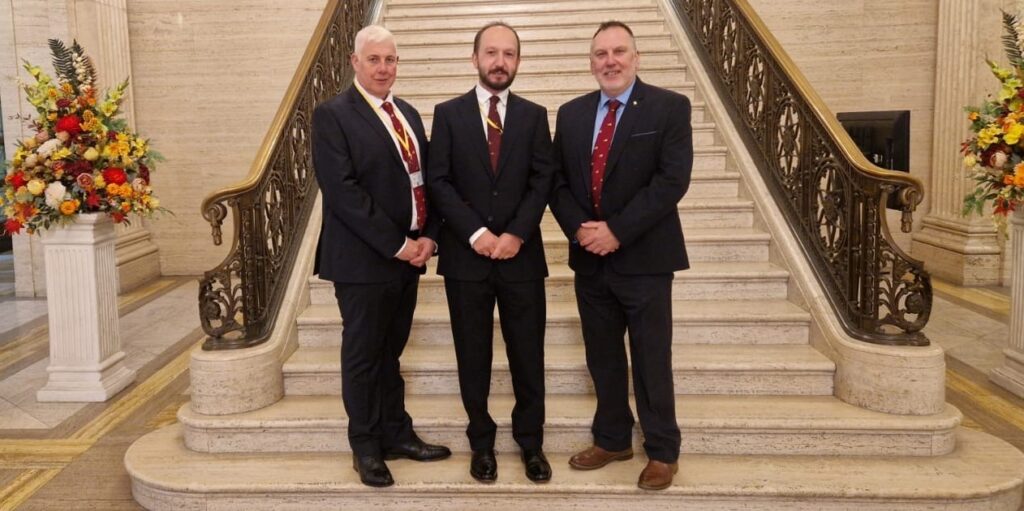
Hunting with Dogs Bill “unworkable”, BASC tells Stormont committee
BASC has told the AERA Committee that the Hunting with Dogs Bill is unworkable due to its implications for firearms holders, dog owners and landowners.


Get information on the legal shooting season for mammals and birds in the UK.

Apply for funding for your project or make a donation today

Comprehensive information and advice from our specialist firearms team.

Everything you need to know about shotgun, rifle and airgun ammunition.


Find our up-to-date information, advice and links to government resources.

Everything you need to know on firearms law and licensing.

All the latest news and advice on general licences and how they affect you.

The Westminster Hall debate on 23 February – prompted by a petition signed by more than 120,000 people opposing plans to subject shotguns to the same licensing rules as rifles – saw cross-party MPs rally against proposals to merge the two firearms licensing regimes.
During the debate, not a single MP spoke in favour of merging shotgun and firearms licensing, delivering a clear and decisive opposition to the proposals.
Twenty-four MPs spoke against changing the current system, highlighting the importance of shotguns to farmers, land managers and gamekeepers, questioning whether the proposed merger would deliver any meaningful improvement to public safety.
Several MPs raised concerns that merging Section 2 and Section 1 would only place further strain on already-overstretched police firearms licensing departments. Many MPs also echoed calls made by BASC for England and Wales to establish a single firearms licensing authority.
A significant number of BASC members were present in Westminster Hall for the debate, filling the public gallery and demonstrating the depth of anger within the shooting community.
Contributions from across the chamber made clear that MPs had been inundated with correspondence ahead of the debate, with many directly citing the strength of views expressed by their constituents.
Julie Minns, Labour MP for Carlisle, said: “For many, this proposal represents a far-reaching regulatory shift with consequences that may not have yet been fully understood. The anxiety that’s been expressed to myself and other members is not rooted in resistance to safety.
“They want dangerous individuals to be prevented from accessing firearms. What they question is whether creating a larger, potentially more congested system, will achieve these outcomes. Or, whether it risks the opposite by overwhelming the very departments responsible for ensuring public safety, and taking away what are incredibly useful and effective pest control tools from farmers, landowners and pest control agents.
“Properly resourcing our police licensing teams, ensuring consistent national standards and rigorous application of the Home Office’s statutory guidance should be the priority.”
Ben Lake, Plaid Cymru MP for Ceredigion Preseli, said: “The proposed changes, although perhaps well-intentioned, are disproportionate, and will not actually realise the stated objective the Government has for them.”
Dave Doogan, SNP MP for Angus and Perthshire Glens, said: “We are here because of the 121,000 signatures on that petition.
“Many of the highest constituency counts of those signatures are in Scotland where gun ownership per capita is much higher than it is elsewhere in these islands, for entirely predictable and understandable reasons. And in my constituency of Angus and Perthshire Glens, the highest respondent rate (of all of the United Kingdom) – 550 respondents against this proposal by government – has come from my constituency…
“…I think what people in here are objecting to, and many people out there are objecting to, is a vast increase in the bureaucratic burden, which will deliver no significant increase in public safety.”
Robbie Moore, Conservative MP for Keighley and Ilkley, said: “One hundred and twenty one thousand people have signed this petition, and I believe it has been one of the fastest signed petitions that the Petitions Committee has received for a long period of time. And I think we could all agree that it’s been a worthy debate to have.
“Most recently, at Ilkley Rugby Club, at an event that had been organised by BASC that I was kindly asked to speak at, many farmers, land managers, pest controllers, those participating in game shoots and clay pigeon shoots, turned up to express their level of concern about the government’s aspiration to merge section 2 and section one under the Firearms Act 1968.
“I think it is widely recognised that firearms licensing is effective at protecting public safety.”
Sarah Dyke, Lib Dem MP for Glastonbury and Somerton, said: “Gun controls should only be strengthened when there is a clear necessity to protect public safety. We Liberal Democrats share concerns that any change to firearms licensing, including the reclassification of shotguns, must be evidence-based, and go hand in hand with appropriate support.
“The Liberal Democrats stand opposed to the Government’s proposal as the current evidence indicates that there is no need to merge Section 2 with Section 1 licences. Both already require rigorous and identical health and safety checks.
“However, the system must be sufficiently resourced, which currently, it is not. This policy poses a real risk to all the communities, both culturally and economically.”
MPs also recognised the importance of shooting to communities across the country, stressing that any changes to firearms licensing must be grounded in evidence and common sense.
BASC is sincerely grateful to the MPs who took the time to attend and speak up for responsible shooting. Their support in Parliament matters deeply to the hundreds of thousands of law-abiding certificate holders who expect and depend on a fair and workable licensing system.
We are equally grateful to our members and supporters who ensured their voices were heard in advance of the debate.
A number of MPs made direct reference to the correspondence they had received from constituents, demonstrating the impact of engagement from across the shooting community.
In the lead-up to the debate, BASC:
The Government has confirmed that a consultation will follow, and the next phase will be decisive. The strength of opposition demonstrated in Parliament must now be reflected in the public response. BASC will provide full, clear guidance on how to respond on our website.
A significant and coordinated response from the shooting community will be essential. When the consultation is published, everyone affected by these proposals must respond in strength and ensure their voice is heard. This is a moment that will define the future of shooting, and we cannot afford to sit it out.
BASC has told the AERA Committee that the Hunting with Dogs Bill is unworkable due to its implications for firearms holders, dog owners and landowners.

Firearms licensing applicants will face stronger safety checks under new rules from the Home Office.

BASC has rejected Defra minister’s comments on the countryside at the Labour Party Conference this week and invited her to see rural life first-hand.