
Bisterne Estate: a shoot, a farm and a wetland recovery
How a decade of targeted predator control and carefully timed grazing brought breeding lapwing and redshank back to Bisterne Estate’s wet meadows.


Get information on the legal shooting season for mammals and birds in the UK.

Apply for funding for your project or make a donation today

Comprehensive information and advice from our specialist firearms team.

Everything you need to know about shotgun, rifle and airgun ammunition.


Find our up-to-date information, advice and links to government resources.

Everything you need to know on firearms law and licensing.

All the latest news and advice on general licences and how they affect you.

Andy Lovel has spent nearly two decades photographing wildlife on North Yorkshire’s grouse moors. Almost all his work is done there for one reason: it’s the most productive ground he can find. In this piece for our Four Seasons campaign, Andy explains how the management of grouse also creates the habitat variety that golden plover, cuckoos, curlew and a wide range of other species rely on.
I’ve always been drawn to being outdoors. My dad was into nature and I grew up stalking, which I still do a bit of now. It was while I was out stalking that I started wanting to record what I was seeing, so I bought a camera and some lenses. Eventually the camera became its own reason to be out there. You can’t really use a rifle and a camera at the same time, so I started heading out purely to photograph birds instead.
That was around 2007 or 2008. I still spend roughly 15 days a year out with a camera, mostly in early spring, when migratory birds are arriving and, some years, when a grouse shoot happens to be on. I’ve never shot driven grouse myself, only walked-up. Most of my photography happens within about an hour of home in East Yorkshire, across the North Yorkshire moors.
If you looked through my photos, you’d notice the vast majority have been taken on a grouse moor. That’s not a coincidence. Of everywhere I go with a camera, grouse moors are consistently the most productive ground, not just for grouse but for everything else that lives alongside them.
That comes down to how the ground is managed. A well-run moor isn’t one uniform block of heather, it’s a patchwork of different ages and structures, and that variety is what allows so many different species to use the same piece of ground.
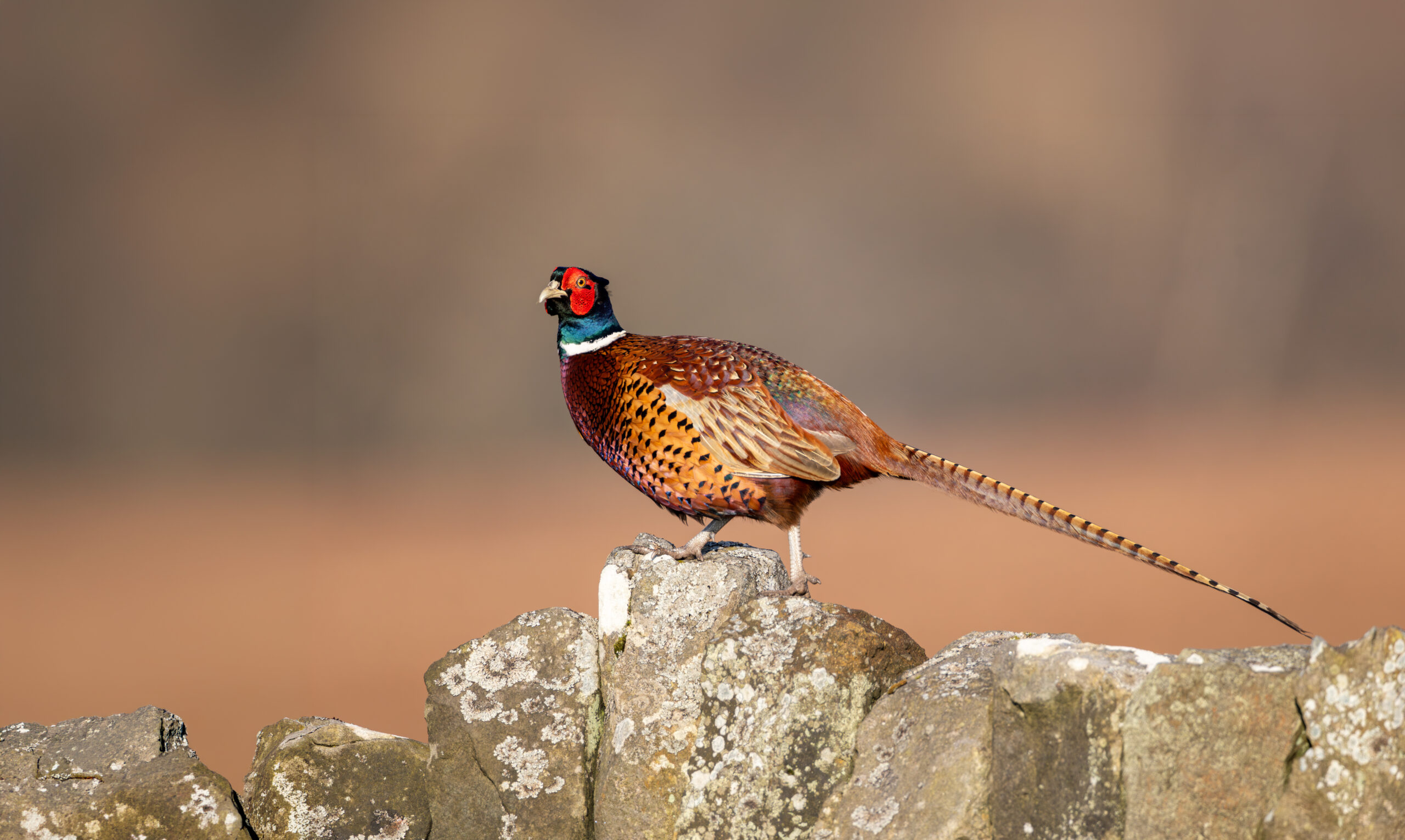
You need young heather and old heather side by side. The older, longer growth gives grouse and other ground-nesting birds cover. The younger growth, regenerating after cutting or burning, is where species like golden plover feed and nest. Where the moor dips into wetter, boggier flushes, you get a different set of birds again, species that need that damp ground rather than dry heather. And where the moor edge runs into woodland, the birds change completely: redstarts, stonechats, wheatears and cuckoos, alongside roe and red deer and brown hares.
Take that management away and the ground doesn’t stay the same, it just gets left to grow long and rank. I’ve seen it happen. It stops being a patchwork and becomes one uniform, overgrown habitat, and the variety of birds using it drops with it.
It’s a fair question why I don’t spend more time on other types of upland or moorland that aren’t managed for grouse. The honest answer is that those places don’t tend to hold anywhere near the same variety or numbers of birds.
It isn’t that grouse moors are the only habitat worth having, it’s that they’re one type of habitat among several the country needs, and they only make up a small percentage of the UK’s total land. Removing that management wouldn’t just affect grouse, it would remove a habitat that a long list of other species currently rely on.
To get the full range of upland wildlife, you need grassland, broadleaf woodland, conifer plantation and heather moorland all existing alongside each other, and a managed grouse moor is a genuinely good example of that last habitat type doing its job well.
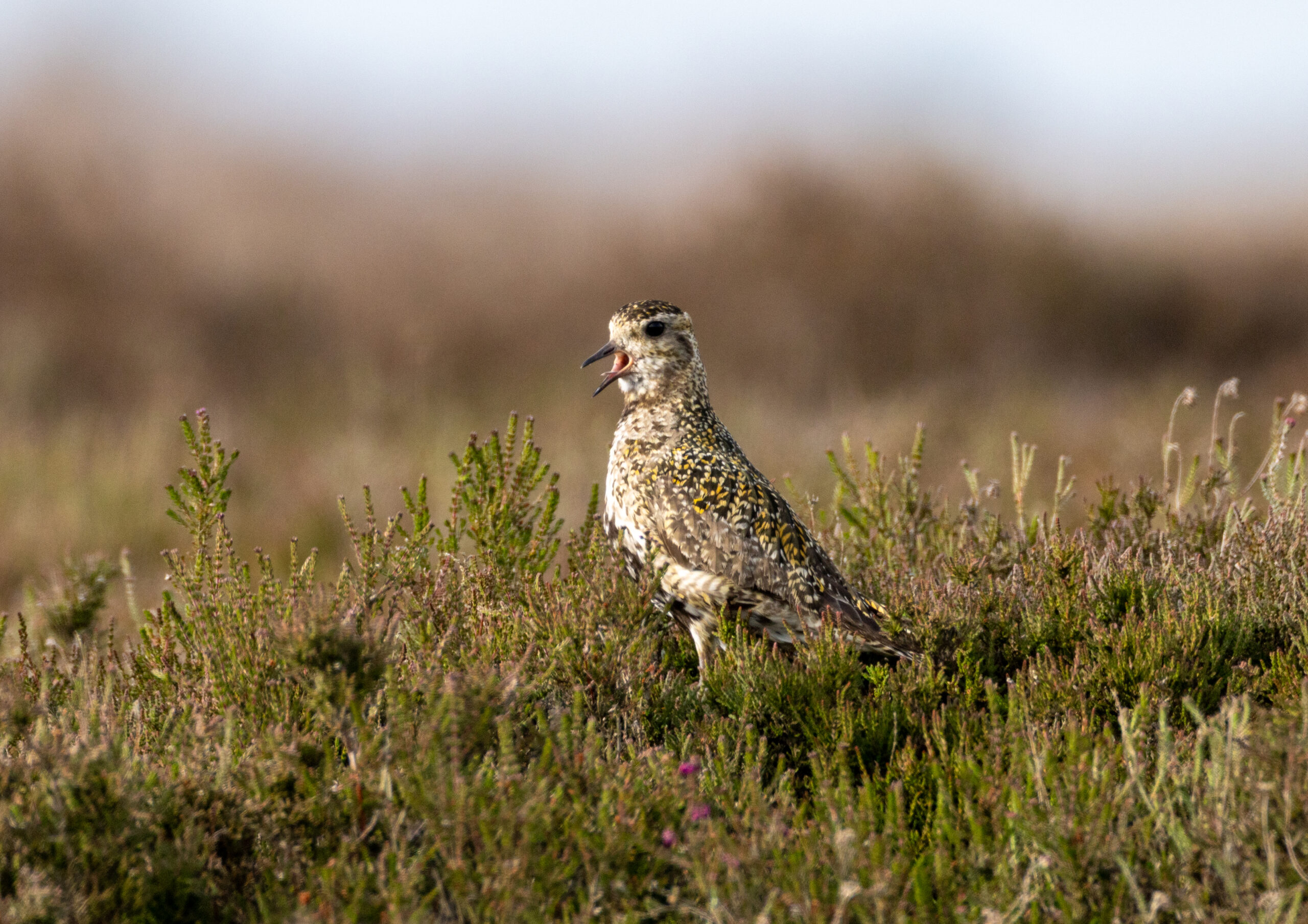
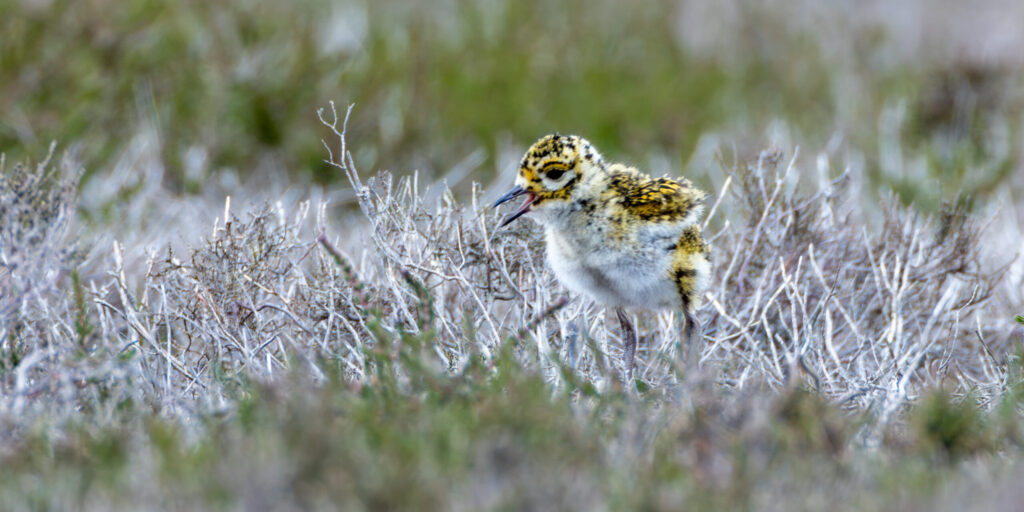
Golden plover is a good example of another species that thrives on grouse moors. I find them by driving the moor roads and looking for the patches where heather has recently been cut or burned in strips and is coming back through low and short. That’s the habitat they want.
Being careful to stay well clear of the nest, I use a thermal spotter to locate where the birds are sitting, then get down low and wait rather than walking in and flushing them, which would put the eggs at risk from cold and from predators while the adults are away.
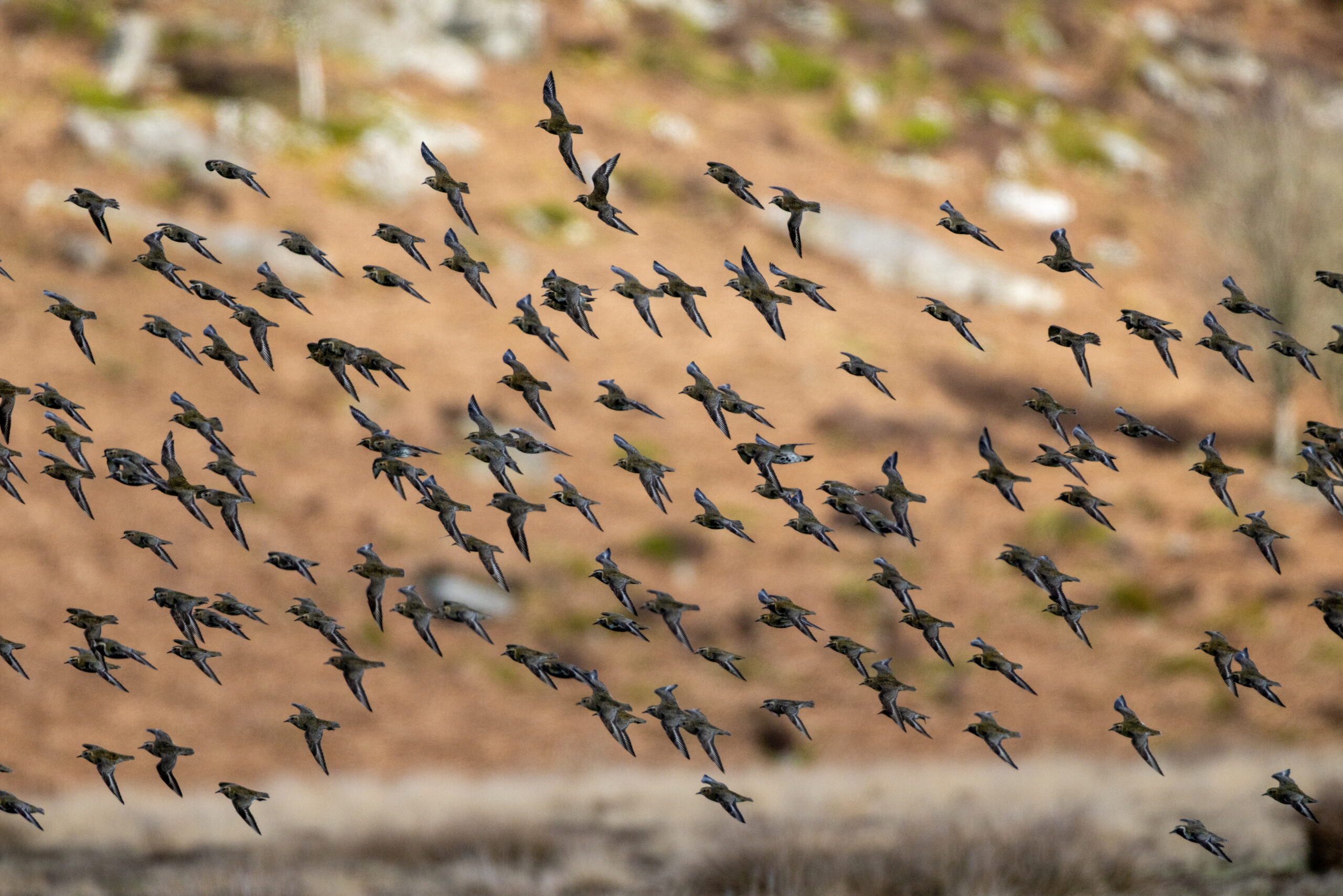
In spring I also see much larger flocks of golden plover passing through on migration, sometimes 200 birds in a single flock, using the moor as a stopover before moving on. I get a lot of my golden plover photography from these moors specifically, because the mix of short and long heather, right next to open ground, is exactly the combination they’re looking for.
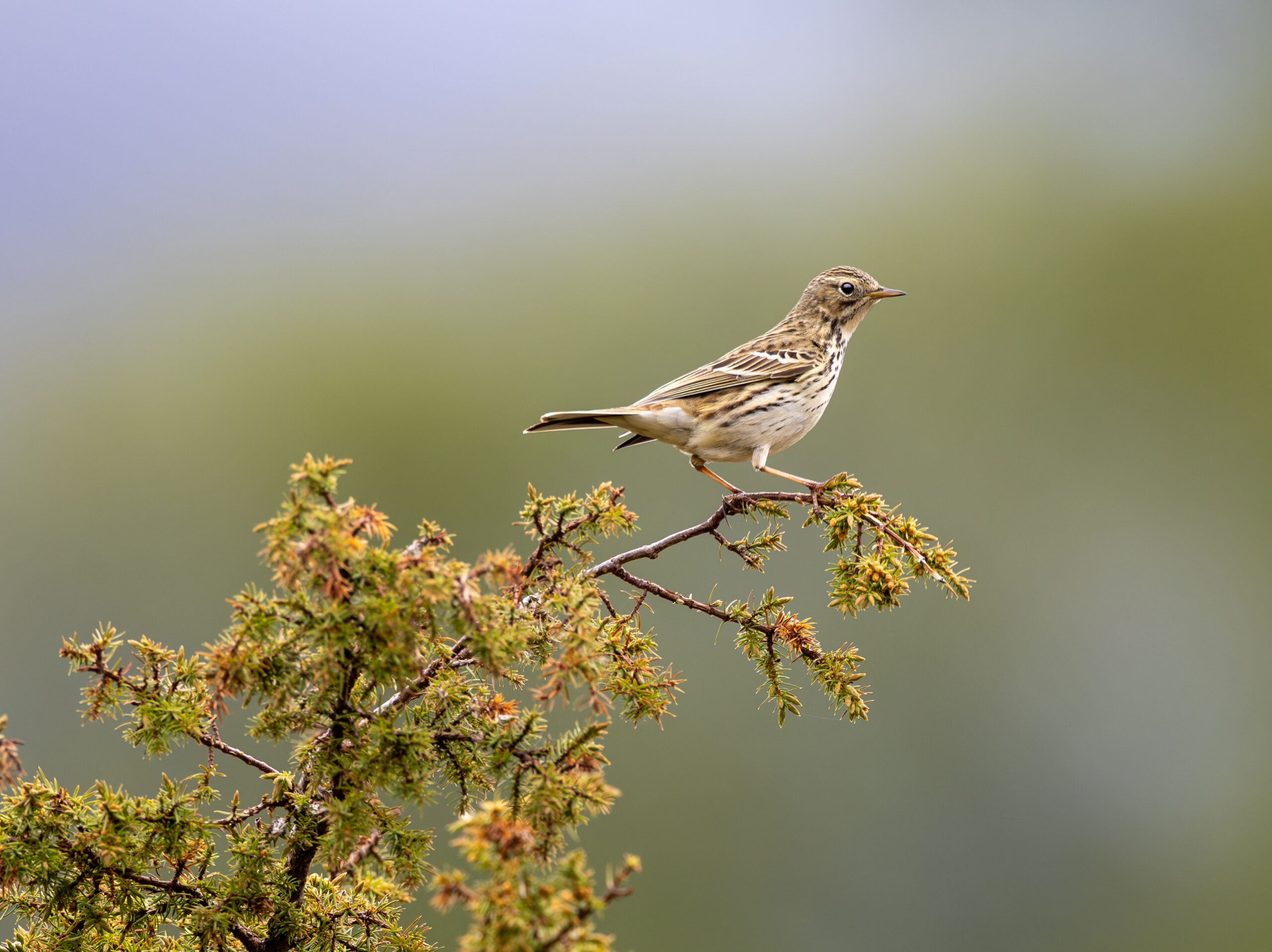
Where the moor meets the trees is where I go for a different set of species entirely, and it’s another example of how one well-managed moor can produce completely different photography depending on which part of it you’re in. Cuckoos use that edge because meadow pipits, one of their preferred host species, nest there, and the cuckoo lays its eggs in the pipit’s nest for it to raise.
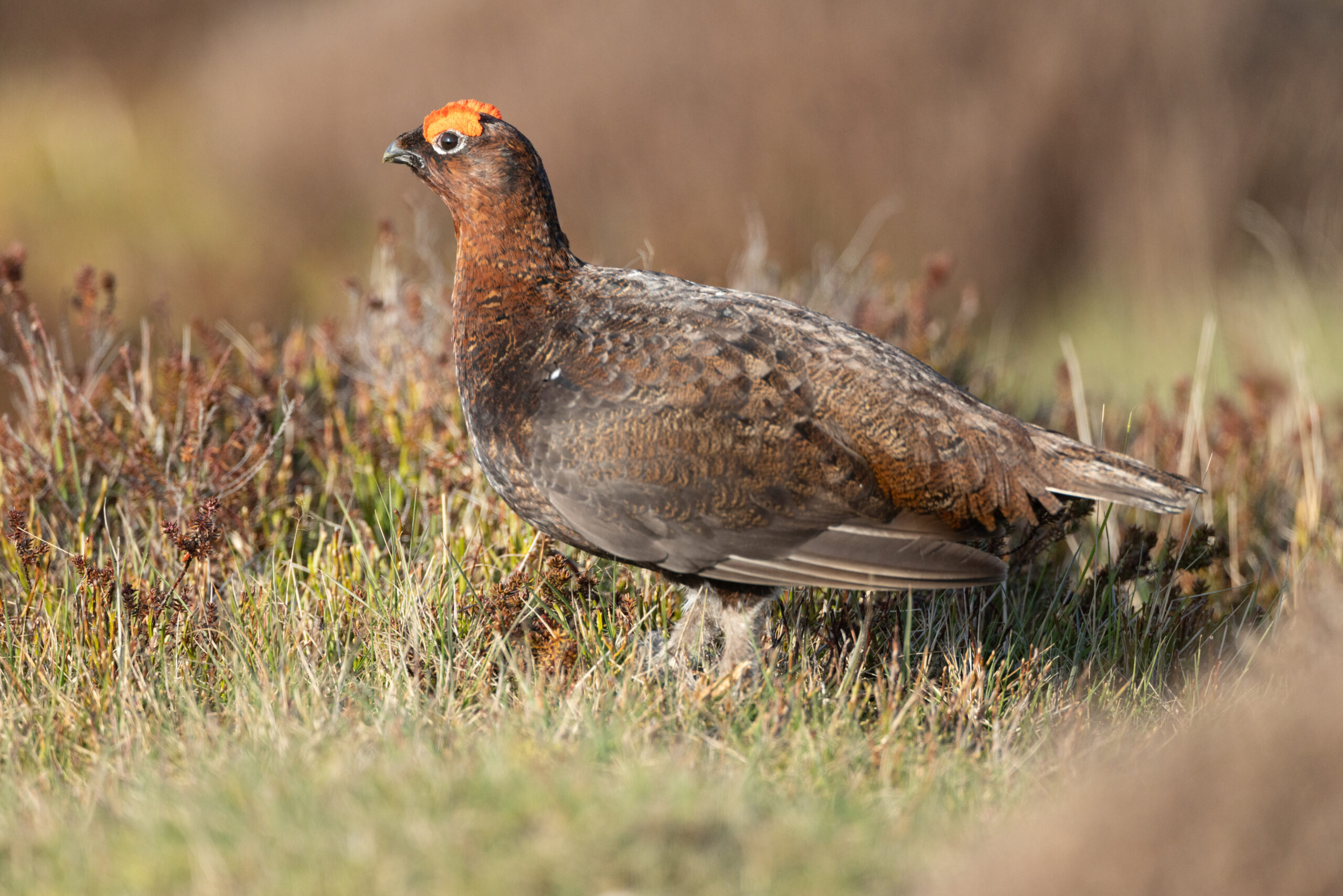
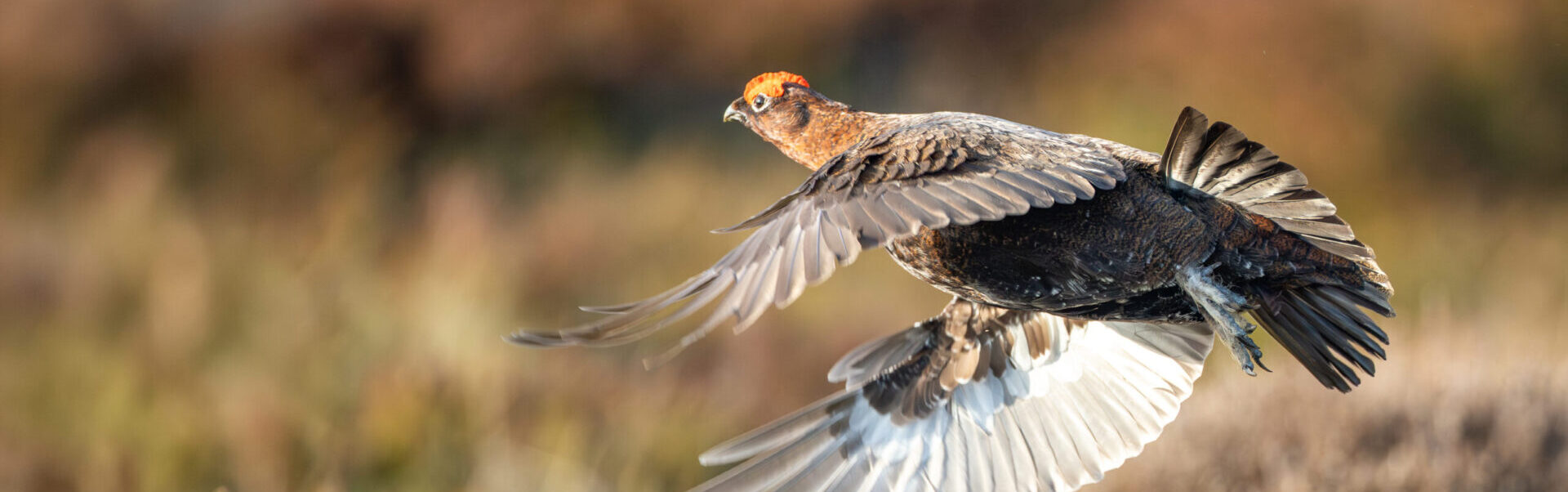
Cuckoos are genuinely difficult to photograph well, which is part of why I enjoy it. Red grouse, by comparison, are easy, since you can often photograph them from the road. The same edge habitat is where I regularly see roe and red deer and brown hares too, drawn in by the cover the trees provide right next to open ground.
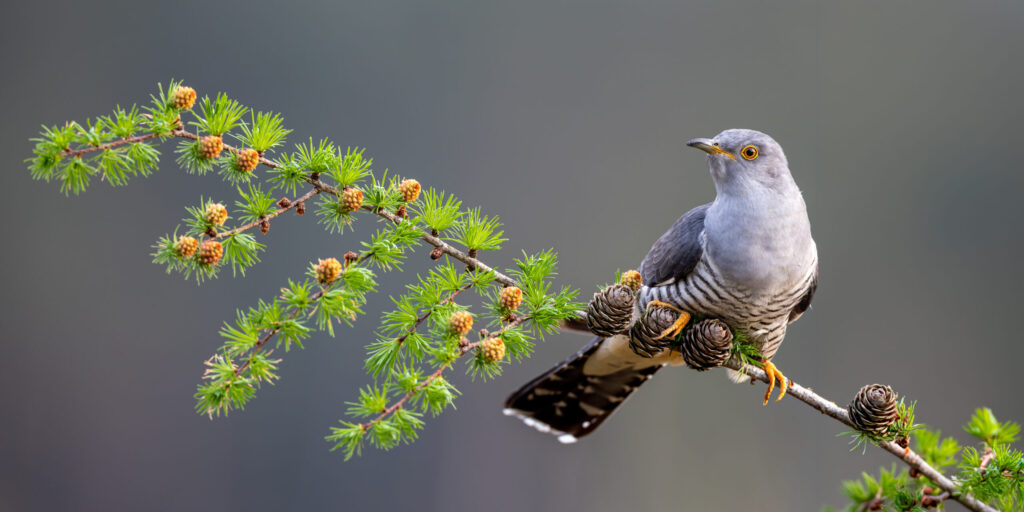
I’ve been photographing the same areas for years, and grouse numbers there have remained stable over that time. Where a moor is managed well, that stability carries through to the other species too, and the main thing that knocks numbers back isn’t predation, it’s a wet, cold spring, which hits chick survival across the board regardless of management.
I’ve also seen what happens on ground where shooting has stopped. There’s a moor I know of in Scotland where the shooting ended, and the bird life on it has effectively disappeared since. Once the ground stopped being managed, it stopped being a good habitat. It’s a stark contrast to the moors I photograph regularly, where the management keeps producing a good range of species year after year, and it’s exactly the reason I keep going back to managed ground rather than looking elsewhere.
Keepers on managed moors control foxes and crows, and that has a direct benefit on ground-nesting birds beyond grouse. A bad wet spring will hit chick numbers on any moor, managed or not, but that only happens every few years. Add in predation that isn’t being controlled and you get losses happening every year on top of the bad weather years, so the population never gets the chance to recover with a good breeding season in between. On managed ground, a good spring can genuinely produce a strong brood, because the main variable left is the weather rather than weather plus unchecked predation.
I talk to keepers when I’m out, not about the shoot itself, just about what’s around. They know that ground better than anyone – they’re there round the clock. What’s using a particular spot changes from year to year, since habitat and weather shift things around, so a conversation about where they’ve seen golden plover, curlew or cuckoo that season is often the best information I get. It saves me time, and it means I’m not disturbing ground unnecessarily looking for birds that have already moved on.
Over the years, that’s part of why I keep returning to the same handful of managed moors rather than trying somewhere new. I already know they’ll produce results and the keepers help me use my time on the ground well.
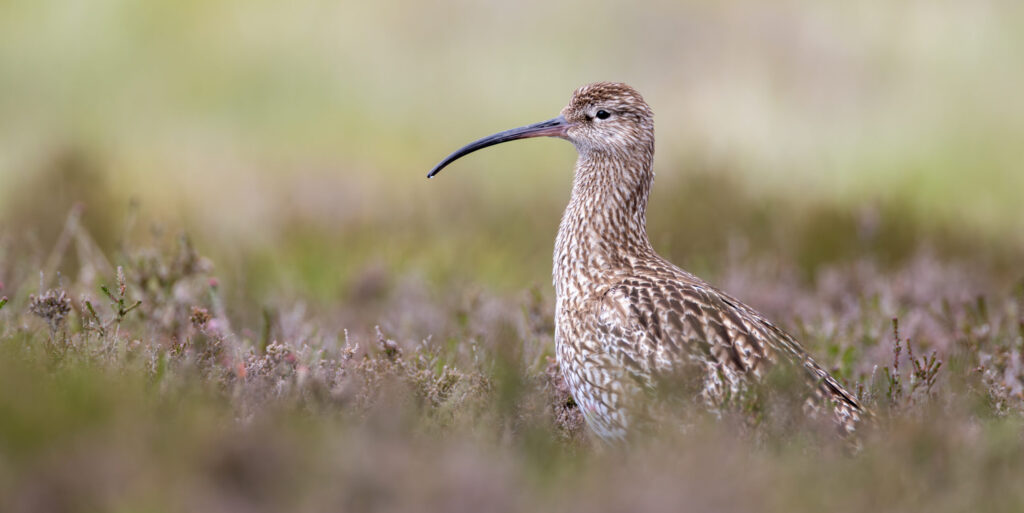
I don’t think grouse moors get a fair hearing in public perception. There’s a view that management is only there to produce birds for the shoot, without any acknowledgement of the conservation benefit that comes alongside it. A lot of other species benefit as a direct result of moorland management for grouse. It isn’t one at the expense of the other. To me, it’s a genuine win-win: the grouse population thrives and so do the species living alongside them, not to mention the local communities whose livelihoods depend on it.
Grouse moors are a unique environment in the UK, with a unique set of species that are hard to find as reliably anywhere else. That’s the reason almost all my photography happens there, and it’s what keeps me going back.
Andy Lovel is a wildlife photographer based in East Yorkshire, working mainly across the North Yorkshire moors. More of Andy’s work can be seen on his Instagram profile: andy.lovel.wildlifephotography.

How a decade of targeted predator control and carefully timed grazing brought breeding lapwing and redshank back to Bisterne Estate’s wet meadows.
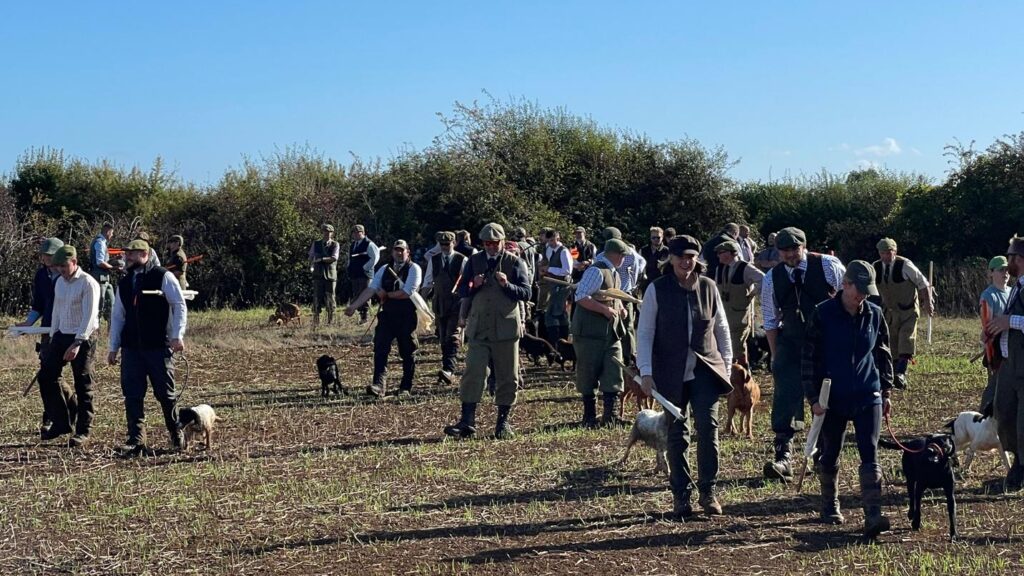
BASC’s Sam Walker joins the beaters at Ponsonby Farms in Gloucestershire to see a wild grey partridge recovery, built on shoot management, in action.

BASC’s Patron Her Royal Highness The Princess Royal joined 167 pupils from five Lancashire primary schools to mark the tenth anniversary of Let’s Learn Moor.