






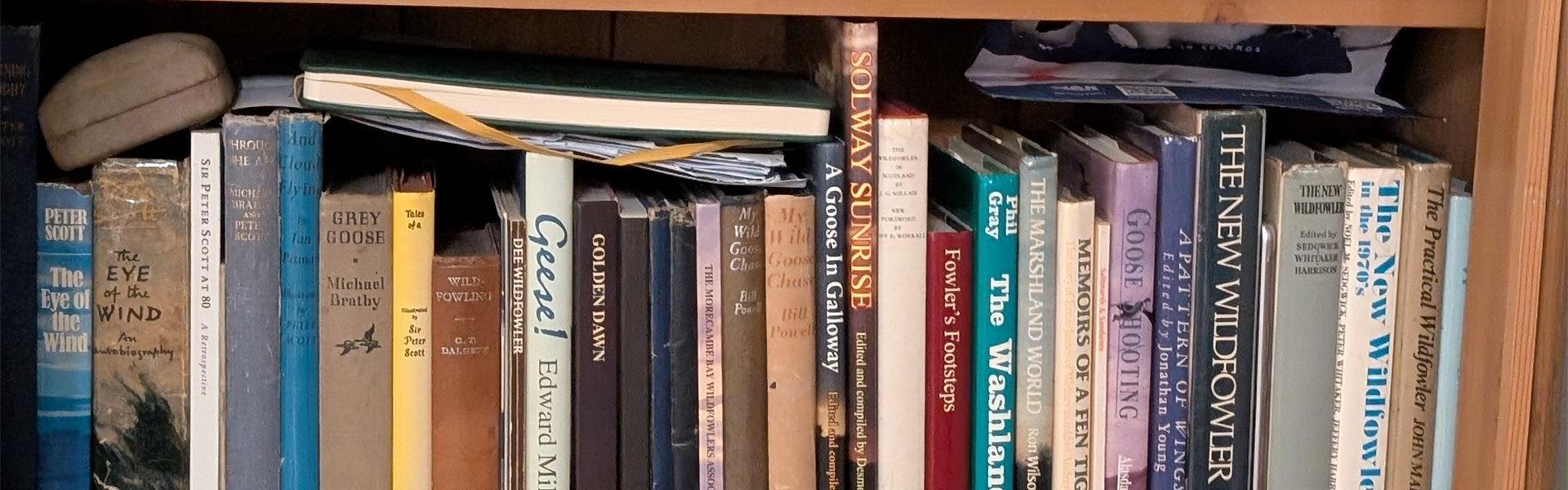
Bookcase of wildfowling books

Wildfowling History 

A long-established tradition

Evidence from Skara Brae shows that wildfowl were being taken for food in the Neolithic period, requiring detailed knowledge of bird behaviour and coastal environments. 

By medieval times, wildfowlers had developed specialised equipment, including distinct arrowheads and mist nets. Almost certainly, mud pattens (used to walk across marsh and mud) were in use by then. Meanwhile, legislation recognised wildfowling as a form of hunting associated with ordinary people.  

With the introduction of gunpowder to Europe, wildfowling with firearms quickly followed, becoming widespread enough that by 1541 it required regulation

A 1611 ballad, The Fowlers’ Complaint, protested the draining of the fens in the voice of a wildfowler – demonstrating both the impact on these landscapes and the cultural importance of the practice at that time.

Tradition and social change

From the 17th to 19th centuries, the clear distinction between high-status recreational shooting and coastal wildfowling remained. Wildfowling was characterised as “poor man’s shooting”; an accessible, everyday pursuit rooted in wild places. 

As populations grew and demand for food increased, wildfowling adapted. The emergence of market gunners reflected wildfowling’s role as a source of affordable protein. This period also saw the development of punt-gunning, requiring specialist boats, navigation skills and large-bore firearms. 

Wildfowlers themselves responded to these pressures by establishing forms of voluntary self-regulation. The Wildfowling association of Great Britain and Ireland (WAGBI) was formed in 1908 through the initiative of Stanley Duncan and the voluntary formation of a national network of clubs, helping to safeguard both wildfowl populations and the marshland environments they depended on. 

Knowledge, continuity and community

Wildfowlers share a strong sense of history, knowledge and identity, built over generations. This is reflected not only in practice, but in the many wildfowlers who have put pen to paper (later, finger to keyboard), documenting their environments, methods and values. 

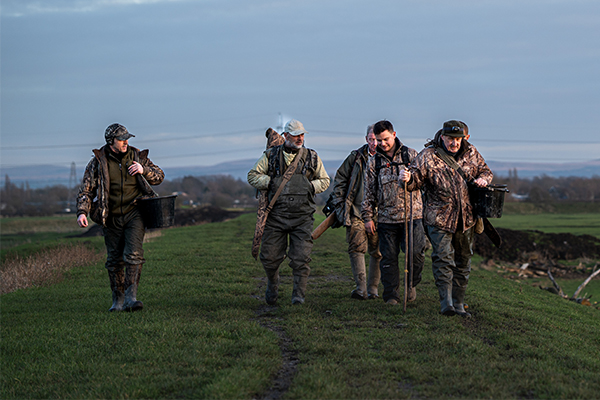
Today, wildfowling remains a living, continuous tradition, shaped by the community which practises it. Experienced wildfowlers act as mentors and custodians of local knowledge, passing their skills and passion to a younger generation. 

Recognising and recording wildfowling heritage

Current work to recognise wildfowling within the UK’s Living Heritage Inventories builds on this long history. 

The material will not only support the submission for inclusion on the inventories, but will also form the basis of an online archive of wildfowling heritage. This will serve to highlight and protect wildfowling heritage, improve public understanding and support the continuation of the tradition for future generations 

Examples of stories about wildfowling history we collected in the course of our heritage work can be accessed below:

Share

Privacy Overview

This website uses cookies so that we can provide you with the best user experience possible. Cookie information is stored in your browser and performs functions such as recognising you when you return to our website and helping our team to understand which sections of the website you find most interesting and useful.