
Gloucester wildfowlers celebrate 70 years
Gloucester Wildfowling and Conservation Association gathered to celebrate more than 70 years of conservation, volunteering and responsible wildfowling.


Get information on the legal shooting season for mammals and birds in the UK.

Apply for funding for your project or make a donation today

Comprehensive information and advice from our specialist firearms team.

Everything you need to know about shotgun, rifle and airgun ammunition.


Find our up-to-date information, advice and links to government resources.

Everything you need to know on firearms law and licensing.

All the latest news and advice on general licences and how they affect you.

BASC Scotland is urging caution over the implementation of NatureScot’s revised Muirburn Code, warning that several mandatory elements are impractical for practitioners, despite repeated concerns being raised throughout its development.
While BASC fully supports the objective of muirburn being undertaken safely and appropriately, we are concerned that aspects of the final Code do not fully reflect the practical realities of managing Scotland’s uplands. This risks uncertainty for those operating under the new licensing regime.
Alongside other rural and land management organisations, BASC has written to NatureScot setting out concerns that a number of mandatory requirements rely on subjective judgement or are difficult to apply consistently. This is a concern when considering the varied and often challenging conditions where muirburn takes place. These include provisions relating to slope gradients and buffer distances around peat features and watercourses. There are requirements that rely on subjective assessments, leaving the opportunity for variable interpretation by practitioners, licensing officers and inspectors.
Peter Clark, BASC Scotland Director, said: “Responsible muirburn is an established and important land management tool, but for the new licensing regime to be practicable, practitioners need confidence that the rules are clear, objective and capable of being applied consistently on the ground.”
BASC believes the inclusion of a number of subjective ‘must’ requirements risks creating uncertainty for practitioners, licensing officers and inspectors alike.
The organisation is concerned that responsible practitioners acting carefully and in good faith could still find themselves unable to demonstrate compliance with certain provisions, despite taking all reasonable steps to follow the Code.
Peter continued: “Our concern is the Code needs to be amended and improved. Those carrying out muirburn need certainty that the rules they are expected to follow are clear and proportionate.
“Where mandatory requirements depend on subjective judgements or measurements that are difficult to assess in complex upland terrain, there is a real risk of uncertainty and inconsistent enforcement. Many of these issues were raised repeatedly by experienced practitioners during the development of the Code, so it is disappointing that they remain as mandatory requirements in the final version.”
Responsible muirburn plays an important role in managing Scotland’s uplands, delivering habitat management, supporting biodiversity, maintaining resilient moorland landscapes and, where used appropriately, helping to reduce the build-up of vegetation that can contribute to severe wildfires.
BASC Scotland is calling on NatureScot to continue to make improvements to the Code, as set out in a joint letter with practitioners, as the new licensing regime is implemented. We are asking the regulator to remain open to reviewing those provisions where practical experience demonstrates that changes are needed.
Mr Clark added: “Everyone wants to see muirburn carried out responsibly and to high standards. Achieving that depends on a licensing system that commands confidence, is based on practical evidence and provides certainty for those responsible for managing Scotland’s uplands.
“BASC Scotland will continue to work constructively with NatureScot, the Scottish Government and our partners to support members through the introduction of the new licensing regime and to help ensure it does not hinder the work by gamekeepers, farmers and other practitioners”.
Gloucester Wildfowling and Conservation Association gathered to celebrate more than 70 years of conservation, volunteering and responsible wildfowling.
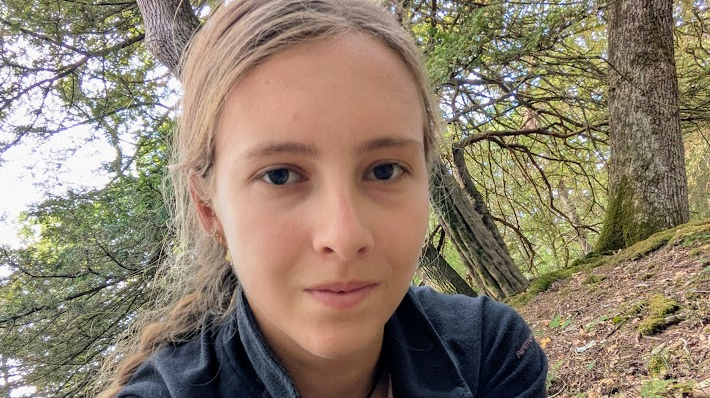
Willow Bloomfield, a first-year ecology student and New Forest commoner, has been awarded the BASC Wildlife Fund Scholarship for 2026.

How a decade of targeted predator control and carefully timed grazing brought breeding lapwing and redshank back to Bisterne Estate’s wet meadows.