
‘Call of the Marsh’ premieres in Parliament
Cross-party MPs and peers joined regulators, conservation bodies and wildfowlers to see ‘Call of the Marsh’, a new documentary from BASC and the Origins Foundation.


Get information on the legal shooting season for mammals and birds in the UK.

Apply for funding for your project or make a donation today

Comprehensive information and advice from our specialist firearms team.

Everything you need to know about shotgun, rifle and airgun ammunition.


Find our up-to-date information, advice and links to government resources.

Everything you need to know on firearms law and licensing.

All the latest news and advice on general licences and how they affect you.

BASC recently addressed members of the All-Party Parliamentary Group (APPG) for Shooting and Conservation, providing updates on key issues affecting wildlife management, conservation and sustainable shooting in the UK.
Martin Edwards, BASC’s head of deer and woodland management, highlighted to the APPG the urgent need to increase deer culls to address a growing range of environmental, public health and animal welfare concerns.
Parliamentarians heard how rising deer populations are contributing to poor woodland regeneration, biodiversity loss, reduced carbon sequestration, increased deer-vehicle collisions, the spread of tick-borne diseases, potential bovine TB risks and declining deer welfare.
Martin told them that addressing the challenge required a two-pronged approach: recruiting more deer stalkers and enabling existing stalkers to harvest more deer.
The APPG was informed that the deer stalking community is ageing, with an average age of 62, making recruitment of the next generation increasingly important. BASC is supporting this effort through training programmes, mentoring opportunities, ‘Young Shots’ initiatives and deer stalking schemes.
However, firearms licensing delays continue to create significant barriers for new entrants, with some applicants waiting between one and two years to receive certificates.
The briefing also emphasised the importance of strengthening venison markets. Reliable routes to market through Approved Game Handling Establishments are essential for high-volume stalkers, while government support for wild venison through public procurement contracts could help increase demand.
Investment in local infrastructure was also identified as a priority. Many recreational stalkers are limited by freezer capacity, restricting the number of deer they can harvest. Grant funding for small-scale and communal chilling facilities would help ensure more venison is utilised and support efforts to reduce deer populations sustainably.
The APPG also received a briefing from James Green, BASC’s head of wildfowl and wetlands, on Defra’s ongoing British Bird Quarry Species Review.
James outlined the proposals contained within the consultation and detailed BASC’s extensive engagement with Defra over the past three years. This has included our leadership on sustainability through its evidence review process and the development of its Sustainable Shooting Code of Practice.
Parliamentarians heard how BASC’s self-regulatory approach provides a flexible and responsive framework for sustainable shooting management.
While the quarry species review represents the first exercise of its kind in 40 years, the code is reviewed every three to five years, allowing us to respond more effectively to emerging evidence and changes in species status.
James also stressed the importance of ensuring future policy decisions are based on robust evidence and factual assessments rather than precautionary assumptions.
Concluding his presentation, he called on MPs and peers to support a proportionate outcome to the review and to recognise the role that BASC’s sustainable shooting code can play in delivering sustainable, evidence-led management of quarry species.
Jak Abrahams, BASC’s director of public affairs, said: “The issues discussed with parliamentarians demonstrate why evidence-based policymaking is so important when addressing the challenges facing our countryside.
“Effective deer management is essential to achieving environmental, biodiversity and animal welfare objectives, but it requires government and industry to work together to remove barriers, support recruitment and strengthen the infrastructure needed to deliver meaningful outcomes. Equally, decisions arising from the quarry species review must be proportionate, based on robust evidence and recognise the positive contribution that sustainable shooting makes to conservation.
“We welcome the opportunity to engage with MPs and peers through the APPG for Shooting and Conservation and will continue to work closely with policymakers to ensure that legislation and regulation support practical, science-led approaches to wildlife management and conservation.”
Cross-party MPs and peers joined regulators, conservation bodies and wildfowlers to see ‘Call of the Marsh’, a new documentary from BASC and the Origins Foundation.
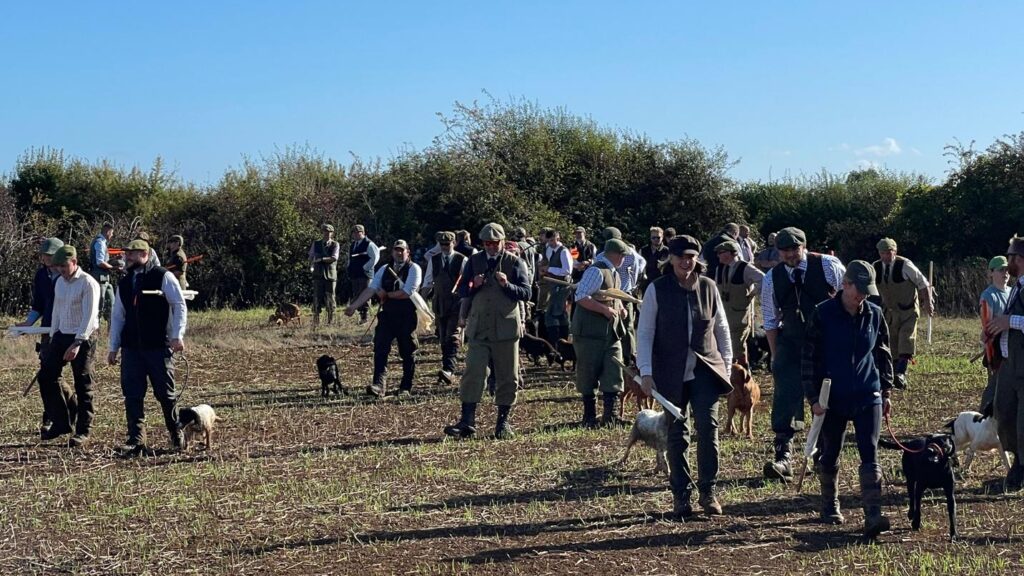
BASC’s Sam Walker joins the beaters at Ponsonby Farms in Gloucestershire to see a wild grey partridge recovery, built on shoot management, in action.

Patrick O’Reilly, BASC head of social science, draws on 40 years of rural work to explain why ministers should swap symbolism for real policy conversations.