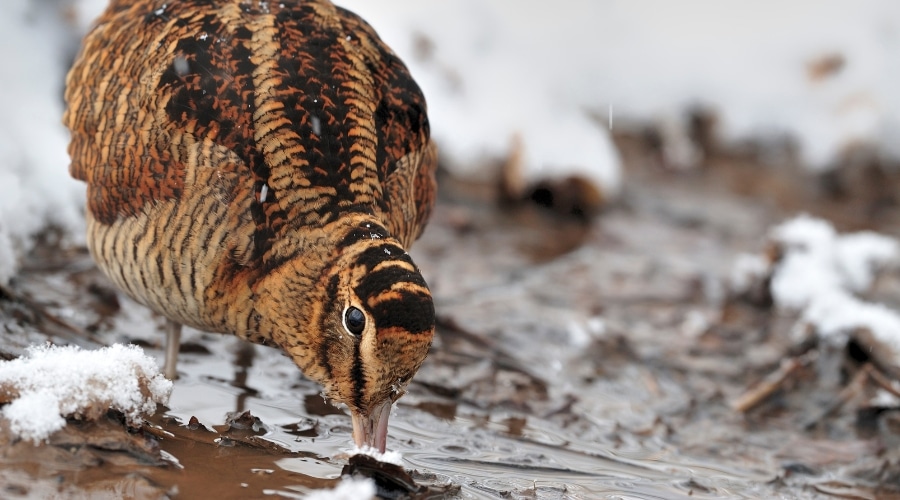
MPs refute woodcock petition claims in parliamentary debate
A debate held in Parliament yesterday on the shooting season for woodcock saw MPs push back on claims made under a petition instigated by Wild Justice.

Get information on the legal shooting season for mammals and birds in the UK.

Apply for funding for your project or make a donation today

Comprehensive information and advice from our specialist firearms team.

Everything you need to know about shotgun, rifle and airgun ammunition.


Find our up-to-date information, advice and links to government resources.

Everything you need to know on firearms law and licensing.

All the latest news and advice on general licences and how they affect you.


BASC has welcomed a new National Audit Office report which confirms many of the concerns BASC has raised about Natural England’s regulatory approach and the urgent need for reform.
The National Audit Office’s (NAO) review of environmental regulation concludes that Natural England (NE) has developed an overly cautious and risk-averse culture, shaped by the precautionary principle and a lack of clarity from Defra on the Government’s risk appetite.
The report warns this approach has restricted innovation, led to missed opportunities for environmental improvement and undermined effective and proportionate regulation.
Commenting on the publication, BASC’s head of law Alex Murray said: “This report reflects exactly what BASC told the NAO. Natural England has become a regulator that defaults to caution and procedure rather than evidence and outcomes. If there is any uncertainty, the instinct is to say no, regardless of the real level of environmental risk or the potential benefits of responsible land management.
“The NAO is clear that this risk-averse culture, reinforced by fear of legal challenge and a lack of direction from Defra, is not delivering the best results for nature or for those who are regulated. That approach is simply not fit for purpose if they are serious about nature recovery.”
Natural England’s risk-averse approach is increasingly affecting well-managed and long-established rural activities. Shooting, predator control, habitat management and gamebird release are being constrained in ways which undermine the contribution these activities make to conservation and practical land management.
BASC submitted detailed evidence to the NAO during the review. It set out how NE frequently prioritises the avoidance of risk over evidence-led decision-making. The NAO’s findings closely reflect those concerns, noting that environmental risk is often treated in absolute terms, where even minimal or theoretical harm leads to a presumption against activity.
The report also supports BASC’s concerns about the use of evidence. The NAO found that NE has not evaluated the impact of its regulatory work for several years and that decisions affecting protected sites are sometimes based on generic or outdated data, rather than robust, site-specific monitoring. BASC has consistently warned that these gaps lead to disproportionate restrictions on land managers and weaken accountability for regulatory outcomes.
Operational issues highlighted by the NAO will be familiar to many BASC members. The report points to inconsistent application of regulation between teams, a loss of local expertise, skills shortages and limited flexibility in engagement. Members regularly report delays, rigid procedures and a lack of practical support or communication, which undermine confidence in the system.
While the NAO notes NE’s stated commitment to reform, BASC believes the report underlines the scale of change required. Without a clear shift towards proportionate, evidence-based regulation, the problems identified will remain.
A debate held in Parliament yesterday on the shooting season for woodcock saw MPs push back on claims made under a petition instigated by Wild Justice.

The arrival of a bird known as ‘YC’ officially kicks off the osprey breeding season in the Lake District.

Magpies will be removed from the general licence in Wales from 1 January 2024.