






Science matters
BASC monitors scientific journals, environmental, policy and political alerts for the results of studies of relevance to shooting and conservation. Below are links to a selection of papers published between January – March 2026.
Read the latest research on...
Birds
- An Evaluation of the Distance at Which Direct Ecological Effects of Released Pheasants Extend Beyond Their Release Sites
- Long-term demographic changes in harvested Eurasian teal (Anas crecca) and Eurasian Wigeon (Mareca penelope) in the UK
- Dispersal Behaviour and Movement Patterns of Pheasants from Woodland Release Pens
- Migrating and Wintering Waterfowl
- Waterfowl Harvest Management
- The role of wild birds in the global highly pathogenic avian influenza H5 panzootic, 2020–2023
- Forage over fear: Assessing drivers of site use in response to shooting disturbance in a managed goose species
- Modelling the national breeding distribution and population size of an elusive forest bird, the Eurasian Woodcock (Scolopax rusticola)
- Estimating Eurasian Woodcock Roding Range Size Using GPS-Tracking
- Assessing geographic changes in hunting pressure on wildfowl through ring recovery locations
- Night-Time Movements and Roosting Habitat Selection of Grey Partridges Perdix perdix in the Agricultural Landscape
- Crippling rates of waterfowl by gunshot in Northwestern Europe: interspecific and geographic differences give clues to possible management challenges and options
- Candida albicans in Faeces of Migratory Geese Can Persist in Agricultural Soils: One-Health Implications for Grazing Livestock
- Waterfowl Move Less in Heterogeneous and Human-Populated Landscapes, With Implications for Spread of Avian Influenza Viruses
- Applying integrated population models to guide conservation planning: Western Capercaillie in Scotland
- Nasal saddles reduce survival rate in Eurasian teal
- Probabilistic approach reveals the toxicity threshold values of free-living raptors in Great Britain, United Kingdom, for the lethal effect of second-generation anticoagulant rodenticides
- An analysis of Scottish Raptor Monitoring Scheme data to improve understanding of the impact of Avian Influenza in 2023 on raptors and raptor populations in Scotland
- The role of ducks in detecting Highly Pathogenic Avian Influenza in small-scale backyard poultry farms
- Scope for waterfowl to speed up migration to a warming Arctic
- The effects of predator removal on mallard production and population change in northeastern North Dakota
Mammals
- Wild UK deer as carriers of livestock lameness associated pathogens
- Sport hunting associated with favourable conservation status of mammals
- Navigating multi-predator dynamic risk landscapes in anthropogenic environments: spatio-temporal plasticity in roe deer habitat selection
- Experimental evidence for large carnivore risk cues reducing deer browsing intensity in a temperate forest
- Understanding Why Grey Squirrels (Sciurus carolinensis) Bark Strip in British Woodlands: A Systematic Map
- Are pine martens a panacea for Britain’s squirrel problems?
- Identifying and Quantifying Conflicts Between Humans and Terrestrial Mammals in Great Britain
- Disentangling complex disease ecology networks: Using structural equation modelling to quantify the direct and indirect effects of deer on Lyme borreliosis hazard
- Forty-five years of studying deer: a personal reflection of the past, present and future of deer research
- Both forest cover and land management practices explain variation in recovering pine marten densities
- Identifying hotspots and drivers of wildlife-vehicle collision risk using citizen science data: a case study focused on the European badger Meles meles
Land management
- Vegetation Responses to Experimental Prescribed Burning and Cutting of Heather on Blanket Peat Sites Managed as Grouse Moors in Northern England
- Historical ecology and stakeholder perspectives can inform peatland fire management
- Views from the hill: Deer stalkers’ perspectives on land-use change in the Scottish Highlands
- Effects of Bike Trails on Roe Deer and Wild Boar Habitat Use in Forested Landscapes
- Thinking outside the bog: Planting dwarf birch (Betula nana) for mountain woodland restoration beyond habitat refugia constrained by overgrazing
- Solar fields provide diurnal habitat for European hares (Lepus europaeus) within the intensive agricultural landscape – Preprint January 2026
- Evolutionary Dynamics, Physiological Mechanisms, and Ecological Connectivity in Global Avian Migration – Preprint January 2026
Other topics
- Renewed coexistence as a conceptual reframing of animal reintroductions to foster sustainable human–wildlife coexistence
- The landscape of no worries? Increased recreation exposure decreases the landscape of human fear in wildlife
- Hunting and fishing harvest data collection: a horizon scanning exercise from the French context
- An analysis of neglected and underutilised species integration in UK alternative food networks: a case study of Dorset
- To hunt or not to hunt: Is it that simple for female hunters?
- Frequency and risk factors for tail injuries in UK dogs under primary veterinary care
- Entry and fate of plastic tips from hunting bullets into game meat – their remaining and distribution in gelatine as a ballistic simulant
- Temporal and spatial drivers of Lyme disease hazard differ between urban and rural environments
- Mapping ticks (Acari: Argasidae, Ixodidae) and informing local public action: Insights from the United Kingdom Tick Surveillance Scheme (2021-2024)
Subscribe to our BASC Live newsletter to receive Science Matters updates straight into your inbox once a quarter.
Looking for more insight?

Science matters: do you know the value of wild venison?
Conversations around food sustainability are growing louder in many parts of the world, presenting an opportunity for wild British game, writes Sophie Stafford.
Science matters: How mentors can shape the shooting community
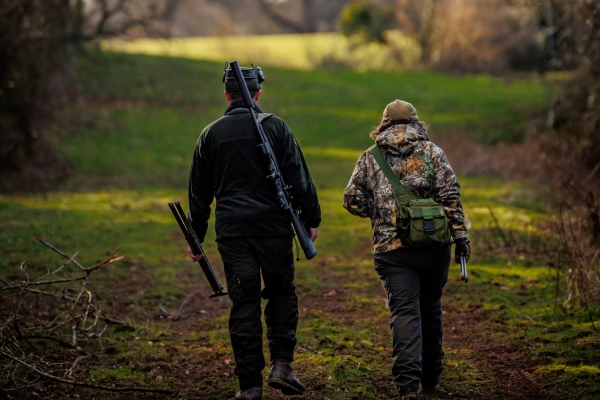
Mentors have a vital role to play in ensuring that the shooting sector continues to grow and flourish, says BASC’s Heather Warrender.
Conservation in action – winter 2024/25
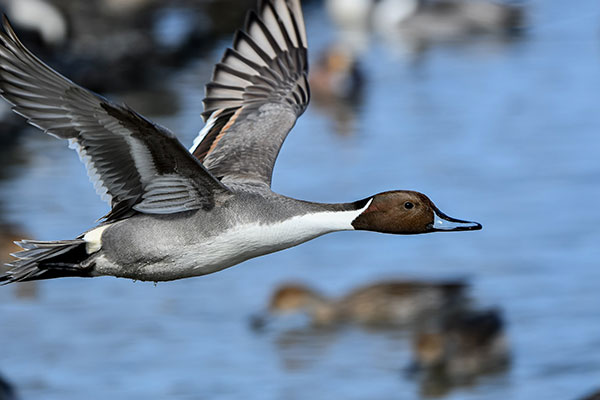
Read our latest update on BASC conservation projects, including how you, your shoot or club can get involved.
Why are nutrient cycles important to deer and gamebird management?
What are nutrient cycles and why are they important to deer and gamebird management? Dr Cat McNicol explains.
Science matters: wonderful woodcock
Heather Warrender reviews the latest research on woodcock, looking at the shooting community’s role in reversing the decline in the fortunes of this enigmatic wader.

From drones to data: the role of technology in wildlife conservation
Dr Cat McNicol discusses the impact that rapid advances in technology are having on research centred around sustainable shooting and conservation.

