BASC call to action on quarry species review
BASC is encouraging members and the wider shooting community to respond to a government consultation on proposed changes to quarry species and seasons in England, Wales and Scotland.
Get information on the legal shooting season for mammals and birds in the UK.
Apply for funding for your project or make a donation today
Comprehensive information and advice from our specialist firearms team.
Everything you need to know about shotgun, rifle and airgun ammunition.
Find our up-to-date information, advice and links to government resources.
Everything you need to know on firearms law and licensing.
All the latest news and advice on general licences and how they affect you.
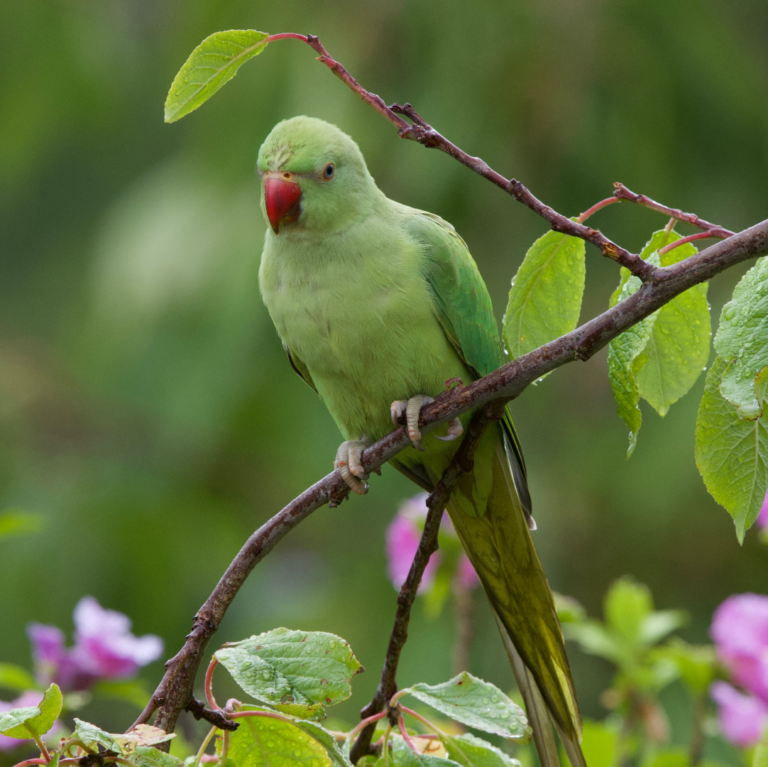
Many decades ago, I glimpsed my first flock of ring-necked parakeets on a visit to Windsor Castle. It was the unfamiliar piercing shrieks that caught my attention and then a squadron of these green arrows zipped between veteran oak trees.
As an avid birdwatcher, it was a “new tick” and so memorable that I recall little else of that visit.
More recently, I heard those unmistakable sounds again, this time ‘up north’ in Liverpool’s Sefton Park on a walk with my sons. “Parakeets”, I exclaimed, pointing towards some trees bordering the lake, and with impeccable timing a small group wheeled and banked overhead in perfect unison, as we shared a novel birding experience.
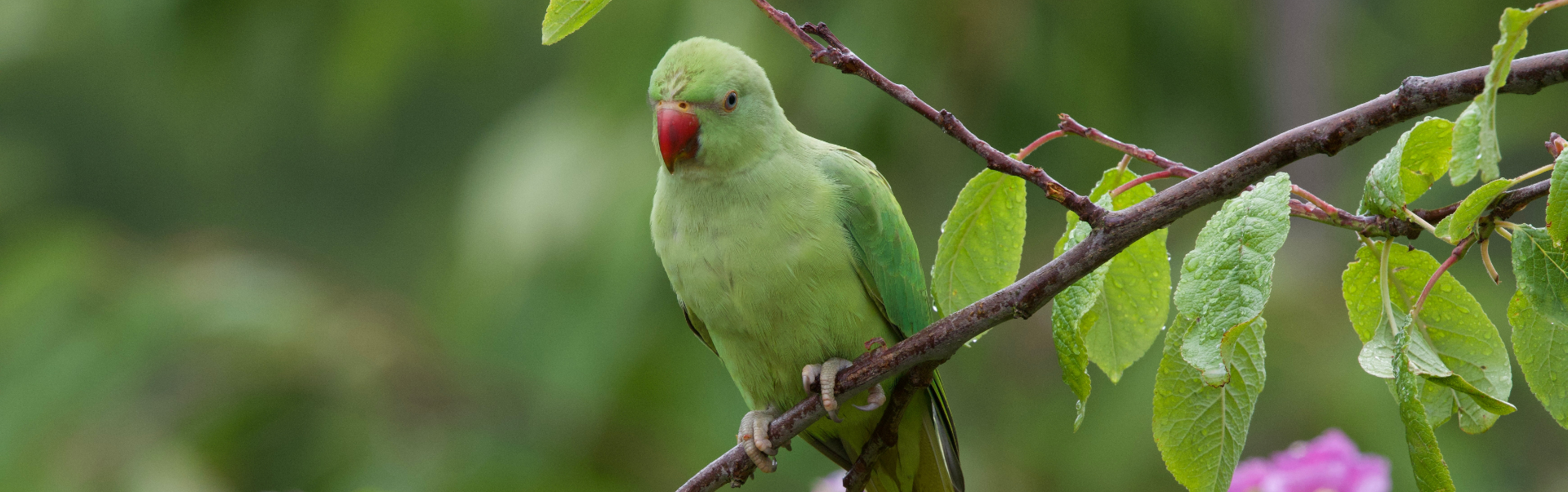
Ring-necked parakeets, also known as rose-ringed parakeets, have been steadily increasing in numbers and spreading beyond London for decades and have now reached Scotland and Northern Ireland. As their numbers grow, the case for giving landowners and farmers the option to act is becoming hard to ignore.
Ring-necked parakeets aggressively compete with native cavity-nesting birds such as woodpeckers and nuthatches, taking the nest holes those species depend on. There have also been reported cases of parakeets killing bats roosting in tree hollows.
This is the same logic that already underpins the control of grey squirrels and mink – the management of an invasive non-native species establishing and spreading unmanaged, at a cost to our native wildlife.
In cities and towns parakeets currently give pleasure to many people as an exotic resident in parks and a visitor to garden bird feeders. However, as numbers grow, problems will inevitably increase for homeowners.
Imagine waking up one morning and finding some of the rubber seals chewed away on one or more doors of your car, as has been happening to residents in Inverness.
Or what about finding that some roof vents and soffits have been obliterated, or soft roofing boards and beams decimated, and you now share your attic space with some rather noisy and messy anti-social squatters?
There are also impacts on agriculture and nature recovery.
Ring-necked parakeets target fruits such as apples, pears, peaches, plums and grapes. They peck and eat small sections of fruit, rendering the remainder unmarketable, causing significant economic losses.
Large flocks will raid fields of corn, sunflower and other seeds. Studies in Mediterranean regions have shown parakeet damage resulting in up to a 30% reduction in corn harvests.
There is another invasive parakeet species at large – the monk parakeet. However, the initial uncontrolled spread of these birds has been curtailed by the government for two reasons.
Firstly, the damage to infrastructure needed action – monk parakeets build large, communal nests as large as a car, frequently on electricity pylons and mobile masts, causing fires and blackouts. Secondly, the fact that these breeding colonies can be targeted in one place made control measures economically feasible.
Defra has largely eradicated local monk parakeet populations by employing people to destroy nests and eggs and remove adults by trapping and killing them or passing them on to aviaries. Hundreds of thousands of pounds have been spent on such management measures, and monk parakeets are now limited to isolated populations in parts of London, Devon and Hertfordshire.
It is a different story for ring-necked parakeets. Their population growth and expansion across the UK are largely unchecked.
The government recognises that there are problems ahead and has placed ring-necked parakeets on some of the general licences in England. However, the terms and conditions are complex and in Wales and Scotland you must apply for an individual licence before you can take action.
In its response to a recent public consultation on changes to the bird quarry lists in England, Wales and Scotland, BASC recommended the addition of both parakeet species to give flexibility of approach for landowners and farmers to act quickly to prevent or mitigate impacts.
This is not about ‘shooting for sport’ as claimed by the antis; it is about ensuring that people have legal options to control these invasive non-native species, just as they currently have for grey squirrels and mink.
Many people living in urban areas may be happy to live alongside parakeets for now, but in the wider countryside action is needed for conservation and food protection purposes.

BASC is encouraging members and the wider shooting community to respond to a government consultation on proposed changes to quarry species and seasons in England, Wales and Scotland.

Roost shooting can be an effective way of helping to control woodpigeon numbers, but one that requires fieldcraft and a degreed of patience.

The European Federation for Hunting and Conservation (FACE) has responded to the government’s bird quarry species consultation, supporting BASC’s position.