




Home » Four seasons » Hedgerows and field margins
Hedgerows and field margins
Hedgerows can be ancient, remnants of forest left after the first farmers cleared areas for cropping, or they can have developed or been planted at any point since then. They can vary hugely but if managed correctly they can have enormous value for game and wildlife.
Key management points
- Hedgerows vary greatly depending on local traditions and the conservation priorities on the farm. However, as a general guide they should be at least 1.5m wide and around 1.5m tall.
- The best time to cut them for wildlife is January or February. This is so animals and birds can benefit from their cover and fruits over winter.
- Avoid cutting in the bird nesting season, typically March to September.
- Cut hedges in a multi-year rotation and spread those to be cut in each year around the farm. This is so wildlife always has uncut hedgerows close to them over winter.
- Connect your hedgerows together and into other habitats, especially woodlands, to allow plants and wildlife to move around the landscape.
- Hedgerows associated with grass margins and cover crops provide greater benefits for game and wildlife, so consider them as part of a habitat mosaic.
- Always think about the wider impacts of your management choices. Ground-nesting birds such as grey partridge don’t like being overlooked, so if they are present then keep hedgerows under 1.5m tall and limit the number of trees within them.
Hedgerows can be defined as any boundary line of trees or shrubs over 20m long and less than 5m wide. They can include associated features such as banks, walls and ditches.
Some of our hedgerows are thought to have originated back in the Bronze Age when forest was cut down in patches to create areas for farming. It’s thought small strips of trees were left as boundaries and those that have survived to the present day are classed as ancient hedgerows. These can often be identified due to their species richness, with five or more native woody species on average per 30 metres. Another clue is if the ground flora include ancient woodland species like bluebells, dog’s mercury or wood anemone.
Farmers also planted hedgerows to establish smaller units of land or to keep livestock in over time. In the 17th to 19th centuries the Enclosure Acts drove more planting as landowners established their properties. However, mechanisation in farming and the priority for domestic food production following the World Wars has seen many hedgerows removed. Nowadays they are planted where boundaries have needed establishing or replacing, or to increase biodiversity and improve habitat.
Hedgerows can support a wide diversity of plant and animal species, including farmland birds and has benefits for gamebird species too, such as grey partridge. They provide habitat such as places for nesting and shelter, act as wildlife corridors and provide food supplies such as berries and insects.
Hedgerows can be planted from a wide range of native woody species such as hawthorn, blackthorn, hazel and field maple. By having a mix of species, you create a diverse habitat for many different farmland birds and insects. Being aware of climate change is important but do not overlook the benefits of planting native species from local genetic stock wherever possible.
Did you know?
A recent study commissioned by BASC shows that game shooting has substantial benefits for our landscapes at the national scale by comparing over 1,000 driven game shoots with similar areas not known to have shoots. The results found that there is twice the length of hedgerows where driven pheasant shooting occurs compared to sites where shooting does not take place.
Management considerations - what is the ideal hedgerow?
A key consideration for any habitat is what management are you going to apply. With hedgerows, too much or indeed too little means there is little value for wildlife. Most people have seen hedgerows cut so small they are thin and cold, ones which are more gap than hedge, ones that have been swamped by ground cover or ones left uncut so long they have become a line of bushes you can walk between. Although hedgerows are highly variable it can be useful to consider some agreed criteria for what good condition looks like.
In England, Defra’s Biodiversity Metric is used to measure a site’s ecological value as part of the planning process. It includes criteria for a ‘standard’ hedgerow which we have paraphrased below:
- An average height of at least 1.5m along the length.
- An average width of at least 1.5m along the length.
- Any gap should be less than 5m and all gaps added together should make up less than 10 per cent of the total hedgerow length.
- Any gap between the ground and hedge foliage should be less than 0.5m.
- Hedgerow margins should be at least 1m of undisturbed ground from outside of the hedge.
- Most of the margins should be undamaged by human activities.
- The margins should be perennial plants and have less than 20 per cent of species typical of disturbed nutrient-rich soil, such as nettles, cleavers or docks.
- The hedgerow or margins should be free of invasive non-native plant species and recently introduced species.
The metric also has some guidance on hedgerows that have trees:
- There should a mature tree every 20-50m of hedgerow and there should be a mixture of young, mature and old.
- Most of the trees should be healthy, accepting that veteran trees or dead limbs in otherwise healthy trees can be highly valuable for wildlife.
- Tree health is not being damaged from livestock, wild animals, pests, diseases or human activity.
However, it is not always good for hedgerows to conform rigidly to those generic standards. For example, where ground-nesting birds are a priority, hedgerows need to be kept lower to avoid them becoming predator perches. So, keep them 1.5m or less. Also, fewer hedgerow trees are key, for similar reasons. Research from the Game and Wildlife Conservation Trust indicates that one tree per 100m of hedgerow is a threshold for what grey partridge will tolerate.
Habitat mosaics and connectivity
Hedgerows have additional value when connecting with themselves and other habitats. In fact hedgerow surveys count those connections and consider them in their scoring systems. Hedgerows can be critical parts of habitat mosaics, which is when several habitat types are intermingled. Candidate habitats could be field margins, cover crops, wetlands, grasslands, heathland etc. Providing a habitat mosaic can support a greater range of important wildlife, providing the variety of habitat that they need and connecting areas to provide safe areas of passage and refuge. This combination of habitat connectivity and mosaics are beneficial for gamebird management too, connecting nesting, foraging and sheltering areas.
Field margins
Field margins can be made up of a mix of grasses and herbaceous plants. They should be at least 1m wide from the outside of the hedgerow, the wider the better. Farming schemes often have options for field margin creation and management.
They can act as wildlife corridors and habitat for nesting farmland birds such as corn bunting and lapwing, or gamebirds such as grey partridge. They can be particularly valuable for insects, which are both important generally but are essential for wild bird chicks in the early weeks of life. Even more so if you can stop or reduce insecticide use.
For shoot management they are useful to both hold birds in general and to walk them between parts of the shoot. Ideally the margins will connect between fields and to other habitat like permanent grass, wetlands or woodland.
Game cover crops and hedgerows
Game cover crops are a vital tool for shoot management and often sited next to hedgerows for practical agricultural purposes. However, with some careful thought they can add greater additional value.
If you consider the hedgerow in isolation, what cover crop might add value to it? If the hedgerow is establishing or for some other reason a little thin, then selecting a cover crop on the windward side that is quite dense will protect it as its structure improves. If the hedgerow typically produces a large amount of fruit in the autumn, then instead of a winter cover a better choice may be a brood rearing cover to support chick survival in the breeding season.
Also think about the hedgerow network and the habitat it connects into and consider what covers at that scale will benefit gamebirds and other creatures. Are there adequate winter covers and/or hedgerows with an excellent structure across the farm landscape or at least along the key corridors you want gamebirds to use to help with shoot management?
Farming schemes
Entering farmland into agri-environment schemes can help with the cost and ambition you have. The options available will depend on how you manage your land and which home nation you live in. Incentives are available for creating and/or managing hedgerows, field margins and cover crops, if the land meets eligible criteria. You can find guidance on who is eligible, what is required and how long for on the website of each country’s statutory body that oversees the schemes.
Share
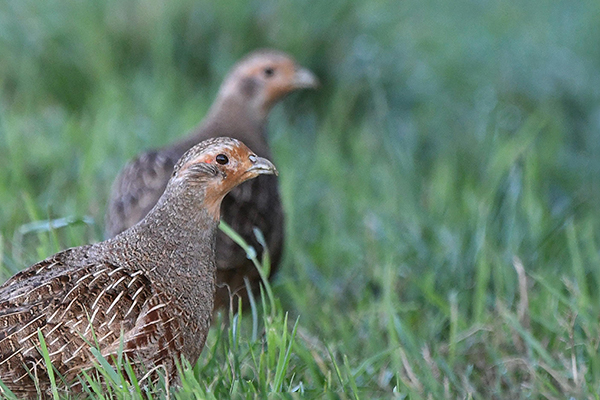
Grey partridge advice
Shoots managing for grey partridge can provide amazing benefits for a wide range of species. Getting their breeding habitat right is a key step on the way.