






Home » Four seasons » Grey partridge » Grey partridge advice
Grey partridge advice
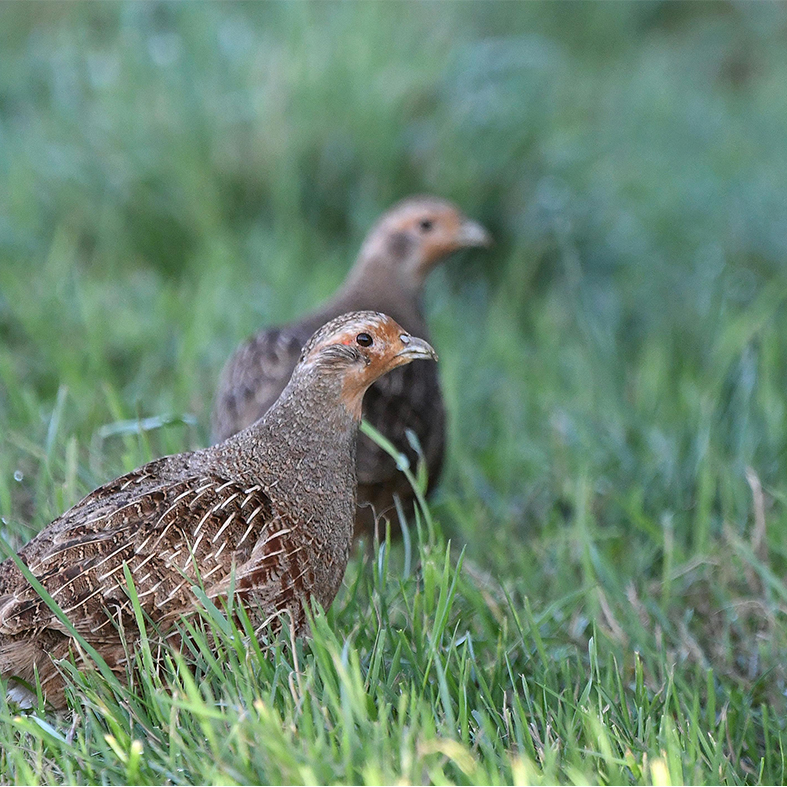
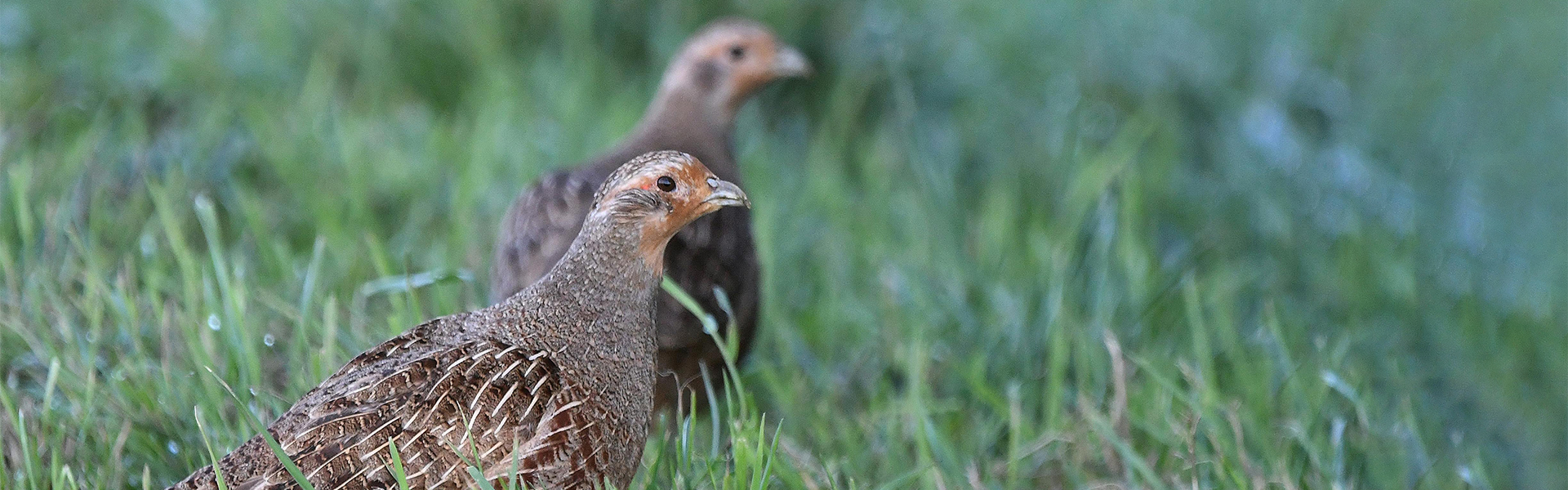
Grey partridge are small, rotund gamebirds with short wings and short, reddish-brown tails. Populations have declined massively and they are only found in good numbers where land is managed specifically for them.
Grey partridge are non-migratory bird of lowland habitats, especially arable land, reedbed, grassland and even coastal zones. They are found across Europe and into Russia as well as North America and Canda. Alarmingly, the UK population has declined by 92 per cent since 1967 and has suffered a 40 per cent reduction in range[1]. Therefore, although they are still relatively widespread, they need focussed conservation effort to ensure local numbers are robust before a sustainable harvest can be taken. Typically, it is only where a shoot and landowner are both committed to grey partridge conservation that they do well.
Identification features
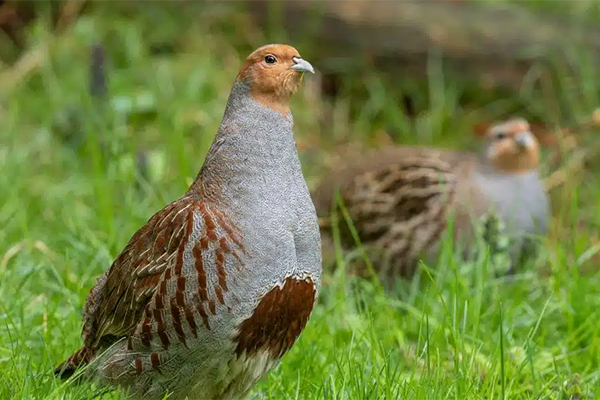
- Characteristic orange-chestnut face, grey neck and underparts, and chestnut flanks
- Males have conspicuous dark chestnut horseshoe patch on lower breast, but this feature is usually only poorly developed in females
- Juveniles have orange or chestnut markings replaced by brown streaking. They are also rarely seen away from adults
- Length: 30cm
- Wingspan – 46cm
- Weight – c.390g
Population - IUCN conservation status
UK: Vulnerable (red list)
European: Least concern (but declining) (green list)
Global: Least concern (green list)
Breeding
- Eggs laid: March-June (peak in May)
- Typical clutch: 13-16 eggs
- Incubation period: 23-25 days
- Able to fly at 14-16 days after hatching
January to March is when coveys start to break up and pairs are formed. Unpaired males often stand in a prominent position calling out for females and you can get some squabbling around dusk when males meet. Females do most of the incubation of eggs, but both parents look after their chicks. Coveys usually consist of one family group but other birds can join them.
Key reasons for decline
- loss of nesting cover such as field margins and hedgerows
- a lack of insects – the essential chick food – from loss of suitable habitat, intensive farming and pesticide use
- predation, especially by foxes, corvids and stoats
Preferred habitat
Although grey partridge prefer arable landscapes, data from the BTO’s Breeding Bird Survey confirms that reedbed, then moorland, pasture and marshland, are also used significantly. As with many species, it is important to consider the benefits of having a habitat mosaic. This is when different habitats are close together, very often in small patches, and for partridge they can provide year-round cover and food resources with minimum travelling.
Grey partridge like grassy areas that are not prone to flooding to make their nest in, especially when close to areas that offer high densities of the right types of insects for their chicks. In arable landscapes this is often provided by field margins next to hedgerows and by cover crops designed to support abundant insect life. Conservation headlands provide another foraging opportunity, where herbicide and pesticide use is reduced or stopped in the outer margins of fields to encourage insect numbers.
Winter habitat needs to provide both shelter and food. Wide, healthy hedgerows protect against wind, especially when associated with wide grass margins. Overwinter stubbles that have not been sprayed with herbicide provide important foraging opportunities, as do targeted winter game cover crops.
Partridge do not like to be overlooked as this poses a risk of discovery by corvids and birds of prey. Studies by GWCT have found hedgerows with more than one tree per 100m attract fewer nesting partridge.
These are substantial considerations when looking at public schemes. Partridge recovery projects require close liaison with the farm to determine how and where to site them.
Practical conservation measures for grey partridge
Habitat provision and management
Partridge need safe places to nest, feed their young and to survive winter. Grassland, hedgerow bottoms, or grass margins in fields can provide the core nesting opportunities. Avoid using chemical sprays in these areas to support insect numbers and minimise vehicle or human access during breeding months.
Because partridge don’t like being overlooked, prioritise hedgerow width and structure over height. Be mindful that the birds – and especially chicks – need to stay dry to avoid heat loss, so the grass cover should not be too thick. Adding a sterile strip of ground next to nesting cover provides them space to get out and dry off after heavy rain.
Specialised wild bird cover crops are extremely beneficial for partridge, both those designed to provide high insect abundance during the breeding season and those providing shelter and food for winter. Some farms with a focus on wild grey partridge arrange this by providing every hedgerow with a decent grass margin on each side, and then on one side brood rearing cover and on the other a winter cover. Coupled with predator management this regime has resulted in high densities of partridge and other farmland birds with similar requirements.
Higher insect abundance can also be supported without fully giving up cropping area to the farm by using conservation headlands. Pioneered by the Game and Wildlife Conservation Trust (GWCT), this involves reducing or stopping the use of selective herbicides and insecticides in the outer margins of arable fields. It allows other plants, sometimes rare arable weeds, to grow under the crop and consequently support a greater variety and abundance of insects that are critical to chicks being able to grow quickly and fledge. These are often options in farming schemes because the farm may get a lower yield from these areas which will have different management needs from the main field.
Wetland areas on farms are always valuable and partridge will use them throughout the year for foraging and cover, so do not overlook wet grassland or reedbeds as part of the habitat mosaic.
Legal predator control
Generalist predators can all take their share of ground-nesting birds and it is important to ensure that you cover all the species that pose a significant risk. This is to avoid the phenomenon of predator replacement, which is when you control one species of predator but not another who then fills the gap left by your control efforts.
For partridge this will include fox, stoat, weasel, rats and potentially mink (only females are closely tied to watercourses). For birds, members of the crow family are the key group, especially carrion crow and magpie. It is important that people check each year which bird species may be controlled and for what purpose under the general licence’s released in each home country. If a species is not covered then an application must be made. Detailed information on predator management is available on the BASC website.
Remember that for predators like birds of prey the best thing you can do to manage their impact is by providing habitat that partridge can hide in quickly. This can include providing good hedgerows, game covers, margins and so forth and managing them appropriately. For example, hedgerows and grass can be cut on a phased rotation, such as only cutting a third of hedgerows a year and distributing those cuts evenly around the farm.
Supplementary feeding
Feed hoppers and overwintered stubbles ensure birds have access to food during the critical ‘hungry gap’ – the period between natural winter food resources like berries and fruits being exhausted and the new growth in the spring. This helps reduce winter mortality and improves adult body condition in the run-up to the nesting period. Best practice for game and songbirds advises continuing feeding into April or May. For grey partridge, consider a feeder per covey or pair to start with and adjust from there. Once the juveniles have got past their initial need for insect protein to enable them to rapidly grow feathers and their general bulk, the feed will support them also. Do locate feeders close to cover so partridge can dart away should a predator or other threat appear.
Grey partridge are well studied, mainly because of the keen interest people have in them as wild quarry species. GWCT’s demonstration site in Hertfordshire ran in 2002-2011 and proved that providing the right habitat at scale, feeding throughout the year and effective ethical predator control saw a rapid recovery for partridge. Breeding pair density increased from around 3 pairs per 100 hectare to over 15 pairs per 100 hectare.
Monitoring and responsible harvesting
Knowing if management is effective and if a surplus of birds can be shot can only be determined by counting the population in the spring and autumn.
Shoots and estates that manage for grey partridge typically participate in GWCT’s Partridge Count Scheme. This long-running programme, started in 1933, provides not only the structure to inform decision on farm but also creates a much larger database of records across the UK that can be used to track overall population dynamics. We recommend anyone with grey partridge to take part, even if you are not specifically managing for them for shooting.
Advice from GWCT is that shooting of grey partridge should not be considered unless you are managing from them and the autumn population is greater than 20 birds per 100 hectares. Further details are available on Grey partridge and shooting from GWCT are available online.
Releasing of red-legged partridge and commercially reared grey partridge
Release of red-legged partridges brings risks if wild greys are present. On shoot days it can be difficult to identify a red-legged partridge from a grey.
Releasing greys where you have a wild population is not recommended, even if that population is small. You should undertake the conservation work detailed above until you have a sustainable population and a shootable surplus. It is only when a population is below two per square kilometre that GWCT might consider a release an option. This is assuming you have addressed all the points as you would to support a wild population.
Re-establishing a wild population of grey partridge
The GWCT supports local partridge groups in various parts of the country, so if you want to try to re-establish a wild population, make sure you join a local group and take part in the GWCT partridge count scheme.
Contact your BASC regional office or our head office game and wildlife management team for further advice.
Share
Hedgerows and field margins
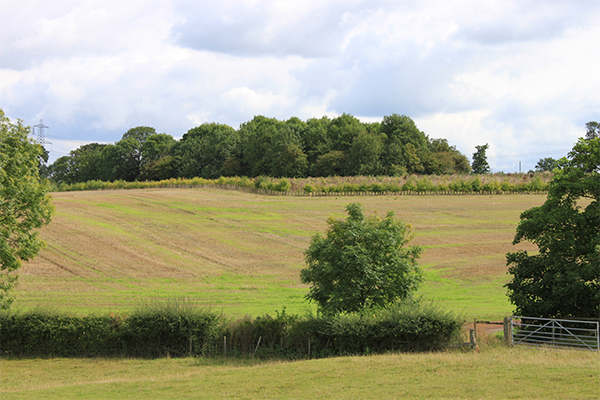
Hedgerows can be ancient, remnants of forest left after the first farmers cleared areas for cropping, or they can have developed or been planted at any point since then. They can vary hugely but if managed correctly they can have enormous value for game and wildlife. Key management points Hedgerows vary greatly depending on local